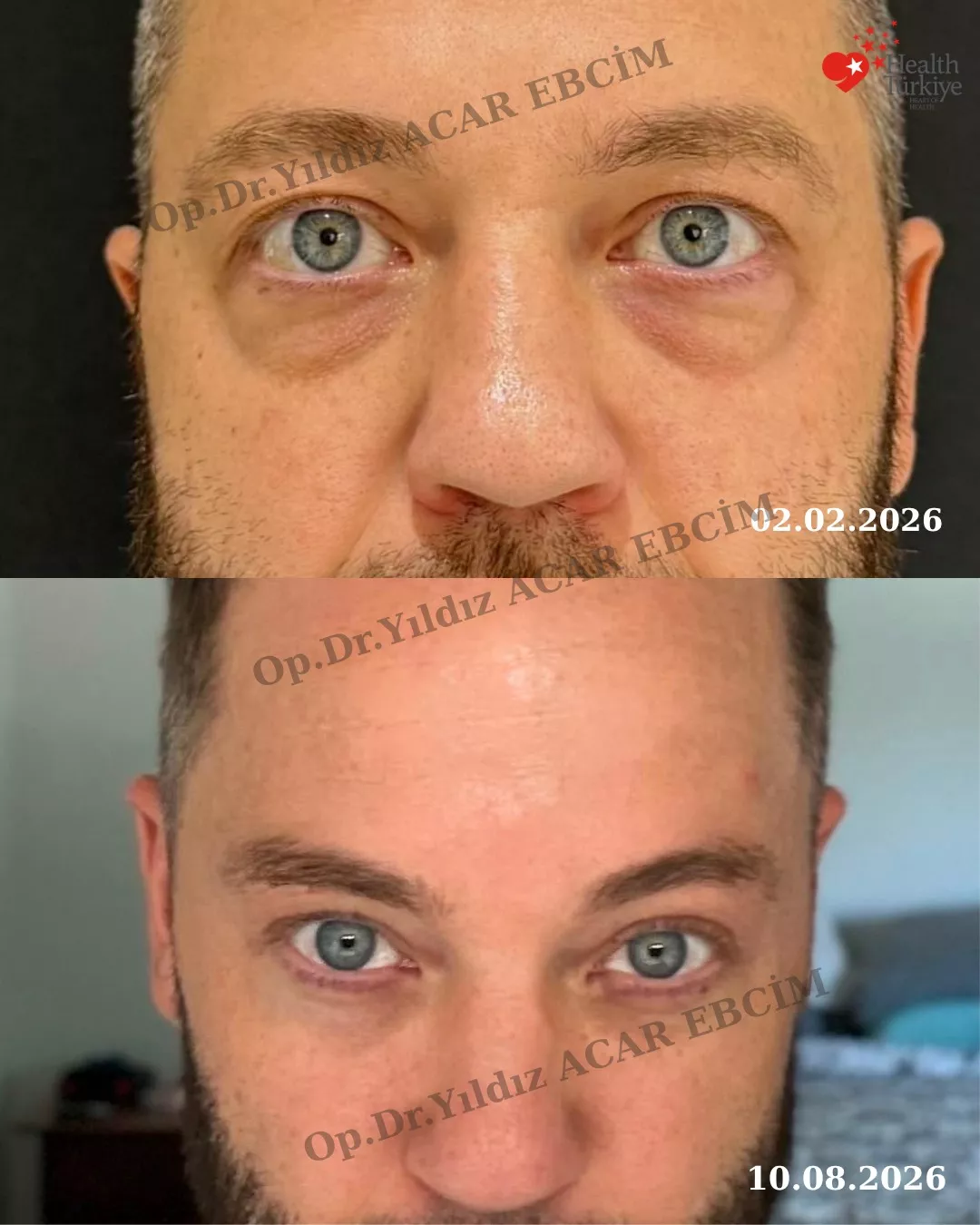
Recently, its name has been mentioned more often: hunter eyes surgery. It especially attracts the attention of people who want a sharper, clearer, and stronger expression around the eyes. Because when the eyes change, it feels as if the whole face changes. The gaze moves to a different place. The expression may not necessarily become harsh, but it becomes more defined. More lifted. More striking.
But there is one point that many people overlook here. This is not only about the day of surgery. In fact, most of the time, the main issue is not that day at all. There is the preparation before it. There is the process after it. There is planning. There is healing. And most importantly, there is the question of whether the face is truly suitable for it. Because the eye area may seem like a small region, but it is the most expressive part of the face. Even the smallest intervention there becomes noticeable.
That is why looking at hunter eyes surgery only as an aesthetic procedure would be somewhat incomplete. This is partly a matter of planning. Partly a matter of proportion. And partly patience. When performed on the right person in the right way, the result can truly be impressive. But if the decision is made in a hurry, by following a trend, or by simply trying to copy a photo, things can become complicated.
What Is Hunter Eyes Surgery, and Who Is It Suitable For?
To explain it in the simplest way, hunter eyes surgery is an aesthetic approach that aims to give the eye area a more almond-shaped, tighter, and more defined form. But it is not only about lifting the outer corner of the eye. In fact, it is a more holistic matter. The outer corner of the eye, the tail of the eyebrow, the temple line, and the overall facial proportions are considered together. A beautiful result already comes from that balance.
Because everyone’s face is not the same. Eye structure is different, bone structure is different, and the position of the eyebrow is different. A look that suits one person very well may appear artificial on another face. It may even create an overly tight and unnatural expression. This is where the biggest mistake is usually made. It is assumed that everyone will get the same effect. However, facial aesthetics does not work that way.
This procedure is mostly preferred by people who have slight drooping in the outer part of their eyes, who want their gaze to look a little more lively, and who want to add a stronger expression to their face. But wanting it alone is not enough. Skin structure, the condition of the eyelid, temple support, eyebrow position, and healing capacity all matter. Sometimes, the result a person expects and the result their face can provide are not the same.
The most important thing I find at this point is this: being the right candidate. Because if you are not the right candidate, no matter how well the procedure is performed, the result may not fully feel right to you. When a change that is compatible with your face is targeted, it looks truly beautiful. Results that do not look like surgery from the outside usually come from this kind of approach.
Why Is the Preoperative Period So Important?
Many people see the preoperative period as a bit of a formality. As if the main issue is the procedure itself. It is not. If the preparation is not good, the period afterward often becomes more difficult. Because every detail matters in this area. What is the eye structure like? How high is the eyebrow? What is the condition of the outer corner? Is the skin firm or loose? Plans made without evaluating all of these beforehand usually do not progress in a healthy way.
There is also the person’s daily life, of course. The medications they use, vitamin supplements, smoking habits, sleep routine, and stress level. These may seem small, but they are not. They all affect healing. Especially in a sensitive area like the eye area.
Before surgery, the following topics usually stand out:
- Eye structure, eyebrow level, and temple line are evaluated together
- Medications and supplements being used must be shared
- If there is smoking, its effect on healing is discussed
- The realism of the expectation is clarified
- If there is active irritation, infection, or a skin problem around the eyes, these are first brought under control
- A plan is made so that the first few days after the operation can be calmer
Here, the expectation part is especially important. Because some people want to see another facial structure on their own face. This may be understandable, but in aesthetics, the idea of an exact copy does not really work. Every face can carry a different expression. When you aim for a result that suits your own face, satisfaction is also higher. The most natural appearance comes out that way.
How Do the First Days Pass?
The first days are a little sensitive. It is necessary to enter the process knowing this. The eye area is a thin region. Therefore, swelling, mild bruising, a feeling of tightness, or sensitivity after the procedure is not very surprising. In fact, these are expected. Sometimes people want to look in the mirror and see the result immediately, but patience is a serious matter in this area.
During the first few days, keeping the head slightly elevated can be relieving. It is important not to sleep face down. Staying away from movements that strain the eye area is also important. Rubbing, scratching, or unintentionally pulling the area should be avoided. Because sometimes small precautions protect the best result.
During this period, attention is usually paid to the following:
- Keeping the head elevated
- Avoiding movements that put pressure on the eye area
- Using the prescribed medications and care products regularly
- Not spending too much time in front of screens
- Avoiding heavy exercise and sudden movements
- Protecting the eye area from the sun
In the early period, a person needs to be a little calm with themselves. Because the image in the mirror can change every day. The area that looks tighter on the first day may become softer a few days later. As the swelling goes down, the face settles as well. In other words, the first appearance is not the final appearance. This should not be forgotten.

What Is the Recovery Process Like?
This varies from person to person. Very clearly. In some people, swelling goes down faster, while in others, edema may remain a little longer. Age matters, skin structure matters, and the technique used matters. Of course, the body’s own healing speed also matters. It is not the same for everyone.
In the first days, the eye area may look a little more prominent. The outer corner may appear more lifted. Some people may even find the appearance too much during this period. But as the tissues calm down, that initial tight look gives way to a more natural expression. That is already the main point. An appearance that does not fight with the face, but settles into the face.
The time to return to social life also varies from person to person. Some people return to their daily routine sooner. Others need a little more time. But I find this part important: recovery is not a single-stage process. Initial recovery is one thing; the final result settling is another. Even the face getting used to the new expression can sometimes take time.
During this period, mild dryness, a feeling of unfamiliarity, or a different kind of tightness in the area may be experienced. These are generally temporary. As the tissues adapt to their new position, they begin to feel more natural. Those who are patient feel more comfortable during this process. Because making rushed judgments often causes unnecessary stress.
What Should Be Considered for the Results to Look Natural?
I think the most critical part of this procedure is exactly here. Because when hunter eyes are mentioned, many people think of a very slanted, very lifted, very bold appearance. But in real life, the best-looking results are the ones that do not give the feeling of a procedure at first glance. People notice a change in you, but they cannot fully understand what it is. That is already what makes it beautiful.
A natural appearance does not depend only on the success of the surgery. How the person protects the area afterward is also very important. Not forcing facial expressions more than necessary, following care recommendations, and staying away from habits that irritate the eyes make a serious difference.
It is also not just about looking at the eyes. It is about the whole face. The eyebrow, forehead, temples, and cheek transition. No matter how good the eyes look, if they do not harmonize with the other areas, the result may become artificial. That is why, when looking in the mirror, it is better not to focus only on the outer corner of the eye. Looking at the overall expression is more accurate.
Daily lifestyle habits also come into play here. Lack of sleep, smoking, intense stress, an irregular lifestyle, and neglecting skin care. All of these tire the face. The eye area shows this immediately. So no matter how well the procedure is performed, how you care for your face afterward directly affects the result.
What Should Be Considered in the Long Term?
Once recovery is complete, the process is not over. In fact, it begins a little there. Because the face continues to live. It is exposed to the sun, gets tired, ages, and makes expressions. Therefore, a certain level of care is still needed in the long term to preserve the achieved result.
First of all, it is important not to irritate the eye area. Maintaining moisture balance is also important. Sun protection, paying attention to sleep routine, and keeping the face generally healthy. These sound very basic, but their effect is serious. Since the eye area is thin, it is already one of the first places to reveal poor lifestyle habits.
It should also be accepted that this procedure does not stop time. Over the years, the skin will still change. The face will still age. But a properly planned surgery can give this area a stronger frame. It can leave a more balanced expression. In other words, there is permanence, but not a frozen immutability. Knowing this is more realistic.
In the long term, the following are especially supportive:
- Protecting the eye area from the sun
- Moisturizing the skin regularly
- Paying attention to sleep routine
- Reducing wearing factors such as smoking and intense stress
- Not neglecting follow-up appointments
- Not neglecting the overall care of the face
Sometimes people only think about the surgery and put the care part in the background. However, what often helps good results stay beautiful for a long time is having regular daily habits.
Finally
Hunter eyes surgery may sound like only an aesthetic touch. But in fact, the matter is bigger. It is about facial expression. It is about the strength of the gaze. It is about how a person sees themselves when they look in the mirror.
When planned correctly, it can provide a truly effective change. A more almond-shaped, clearer, and more lifted eye area can be possible. But the way to achieve this is not through haste. It is through proper analysis. It is through patience. It is through wanting a result that suits your own face.
I think the best result is this: the face changes, but its character does not disappear. The expression becomes stronger, but it does not become artificial. The person looks more energetic and more striking, but still remains like themselves. That is exactly where the real beauty begins.