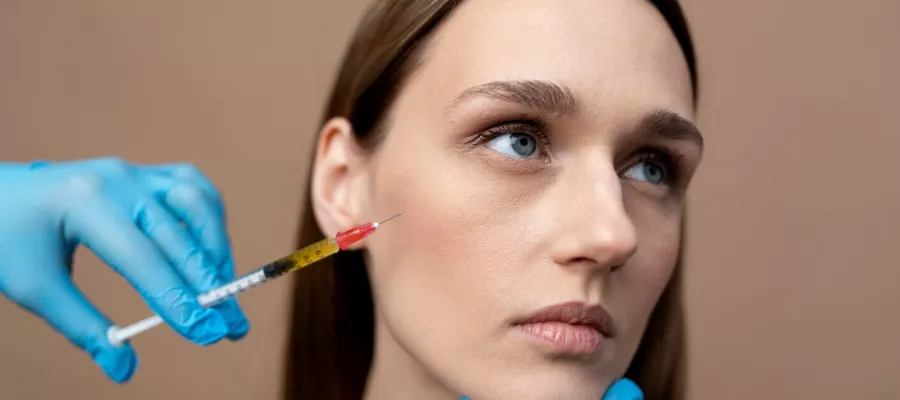
What Is Facial Fat Transfer?
Facial fat transfer is a procedure in which fat tissue taken from another area of the body is prepared and transferred to areas of the face that have lost volume. The main aim is to restore volume lost with age and create smoother, more balanced transitions between facial features.
Facial fat transfer may be preferred for concerns such as hollow areas, asymmetry, and a tired appearance. Since the patient’s own tissue is used, tissue compatibility is generally high. The result may vary depending on how much of the transferred fat survives and the structure of the face. Proper planning helps maintain a natural and balanced facial appearance.
How Is Facial Fat Transfer Performed?
Facial fat transfer consists of removing fat, preparing it, and transferring it to the areas of the face where volume is needed. First, a facial analysis is performed and areas with volume loss are identified. The fat is usually taken from areas such as the abdomen, waist, or thighs.
The collected fat tissue is prepared using suitable methods and made ready for injection. It is then transferred in layers to the planned areas using thin cannulas. Controlled placement aims to distribute the fat evenly within the facial tissues. Recovery time after the procedure may vary depending on the extent of the treatment.
Facial Analysis and Planning
Facial analysis and planning are performed to determine where the fat should be placed and how much should be used. The doctor evaluates volume loss, facial proportions, and asymmetries in areas such as the cheeks, temples, under-eye area, and jawline. The patient’s expectations are also considered, and a personalized treatment plan is created with the aim of preserving natural facial contours.
Fat Removal from the Donor Area
Fat is usually taken from areas with sufficient fat tissue, such as the abdomen, waist, or thighs. The required amount of fat tissue is collected in a controlled manner using thin cannulas inserted through small incisions. The donor area is selected according to the patient’s body structure and the amount of fat needed. The collected fat is then processed before injection.
Fat Preparation
The collected fat tissue is prepared using specific methods so that it is suitable for injection into the face. The fat may be separated from blood, fluid, and unwanted components using centrifugation, filtration, or similar techniques. This process produces the fat tissue that will be used for transfer. The prepared fat is then placed into suitable syringes and made ready for injection into the planned facial areas.
Injecting the Fat into the Face
The prepared fat is injected in small amounts into the previously identified areas of the face using thin cannulas. The doctor distributes the fat carefully across different points to create natural and balanced volume. Treatment may be applied to areas such as the cheeks, temples, under-eye area, or jawline. Some of the injected fat may be naturally absorbed by the body over time.
Which Areas Can Facial Fat Transfer Be Applied To?
Facial fat transfer can be applied to different areas affected by volume loss. The cheekbones, cheeks, temples, and jawline are among the most commonly treated areas. It may also be used to create smoother transitions around the nasolabial folds and marionette lines extending downward from the corners of the mouth.
The under-eye area, brow area, and forehead may also be considered in suitable patients. Limited volume enhancement may be performed around the lips to support facial proportions. The areas to receive fat are determined according to facial structure, skin thickness, existing volume loss, and the desired appearance.
Who Is Suitable for Facial Fat Transfer?
Facial fat transfer may be considered for people who have facial volume loss or noticeable hollow areas and have enough donor fat available. In people whose body weight remains relatively stable, the transferred volume may remain more consistent over time. In patients with very low body fat, the amount of fat available for harvesting may be limited.
This method may be preferred by people who want to restore facial volume using their own tissue or are looking for an alternative to dermal fillers. The procedure may be postponed in the presence of active infection, uncontrolled medical conditions, or bleeding disorders. It is also generally not performed during pregnancy or breastfeeding. Suitability is determined after a medical examination and facial analysis.
What Are the Risks and Side Effects of Facial Fat Transfer?
As facial fat transfer is a medical procedure, it may involve certain risks and temporary side effects. The most common effects include swelling, bruising, and tenderness. Some patients may experience asymmetry, surface irregularities, or greater-than-expected loss of transferred fat.
Although the risk of infection is low, it cannot be completely eliminated. Serious vascular complications are also rare but important risks. For this reason, the procedure should be performed by a doctor with detailed knowledge of facial anatomy, using appropriate techniques and sterile conditions. The depth and amount of fat placement should be carefully planned before the procedure.
Swelling and Bruising After Facial Fat Transfer
Swelling and bruising after facial fat transfer are usually temporary. Swelling may become more noticeable during the first 48 hours. Most bruising generally begins to improve within 7–14 days.
If recommended by the doctor, cold application and keeping the head elevated may support the recovery process. Strenuous exercise, sauna use, and activities involving intense heat may need to be limited during the first few days. The timing of returning to makeup also depends on the extent of the procedure and the condition of the skin. As swelling decreases, facial contours begin to appear more clearly.
Recovery After Facial Fat Transfer
Recovery after facial fat transfer takes place both in the face and in the donor area where the fat was removed. Swelling and tenderness may be more noticeable during the first few days. As swelling decreases, facial contours become clearer, and the amount of transferred fat that has survived can be assessed more accurately over time.
| Period | General Recovery Process |
|---|---|
| First 48 hours | Swelling and tenderness may be more noticeable |
| First week | Bruising and swelling begin to decrease |
| 2–4 weeks | Facial contours begin to appear more clearly |
| 1–3 months | The results of the fat transfer can be assessed more accurately |
What Are the Differences Between Facial Fat Transfer and Dermal Fillers?
Facial fat transfer and dermal fillers differ in terms of the material used, the treatment process, and the duration of their effects. Hyaluronic acid fillers can be injected directly into the selected area, and suitable products can be dissolved if necessary. Fat transfer uses the patient’s own tissue and requires fat to be harvested from a donor area.
Dermal fillers may be preferred for smaller and more precise volume needs, while fat transfer may be considered for broader areas of volume loss. Because fat harvesting is required, the recovery period may be more extensive than with fillers. The choice of treatment depends on facial anatomy, the degree of volume loss, and the desired result. In some cases, both methods may be planned for different areas of the face.
| Feature | Fat Transfer | Hyaluronic Acid Filler |
|---|---|---|
| Material used | Patient’s own fat tissue | Hyaluronic acid |
| Donor area | Required | Not required |
| Procedure | Fat harvesting and transfer | Direct injection |
| Treatment areas | May be used for larger areas | May be used for more localized areas |
| Reversibility | Cannot be directly dissolved | Suitable HA fillers can be dissolved |
What Should Be Considered Before Facial Fat Transfer?
Before the procedure, medications, supplements, medical history, and daily habits should be discussed with the doctor. Blood-thinning medications and certain supplements may affect the risk of bruising, so any changes to their use should only be made on medical advice.
Smoking may negatively affect circulation, so stopping or reducing smoking before and after the procedure may be recommended. Limiting alcohol consumption may also support recovery. Arriving without makeup on the day of the procedure and wearing comfortable clothing can be helpful. Work, travel, and special event plans should take the possible duration of swelling and bruising into account.
Facial Fat Transfer Prices 2026
In 2026, facial fat transfer prices in Turkey may vary depending on the extent of the procedure and the treatment plan. Prices may range from approximately TRY 90,000–180,000 for procedures involving limited areas and TRY 150,000–300,000 for more extensive treatments covering the full face.
The total cost may be affected by the type of anesthesia, use of an operating room, the method used to prepare the fat, the number of areas treated, and the follow-up process. The need for additional sessions and the overall scope of the procedure may also influence the price. When comparing prices, it is important to consider not only the total fee but also which services are included in the treatment.
Frequently Asked Questions
Is Facial Fat Transfer Permanent?
Facial fat transfer is not considered completely permanent, but fat cells that successfully survive in the tissue may provide volume for a long period. During the first few months, part of the transferred fat may naturally be absorbed. It is generally necessary to wait several months before the result can be assessed more reliably.
Changes in body weight may also affect facial fat volume. Smoking and circulation problems may negatively affect fat survival. In some patients, an additional procedure may be considered to achieve the desired volume or improve balance.
How Long Does It Take for Facial Fat Transfer to Settle?
The appearance after facial fat transfer generally begins to settle noticeably within 4–8 weeks. During the first few days, swelling may make the face appear fuller than usual. As the swelling decreases, facial contours become more defined.
By around the third month, the amount of transferred fat that has survived can usually be assessed more accurately. Minor asymmetries seen during the first few weeks may be related to swelling. Rather than making an early judgment, it is better to wait until the recovery process has progressed before evaluating the final result.
When Does Swelling Go Down After Facial Fat Transfer?
Swelling after facial fat transfer decreases noticeably within 7–14 days in most patients. The first 48 hours may be among the periods when swelling is most pronounced. Bruising also generally begins to fade after the first week.
Keeping the head elevated and following the doctor’s aftercare instructions are important during recovery. Strenuous exercise and hot environments may cause swelling to last longer. If one-sided swelling that continues to increase, severe pain, or another unexpected symptom develops, the doctor should be contacted.
At What Age Can Facial Fat Transfer Be Performed?
There is no single age limit that applies to everyone considering facial fat transfer. The decision depends not only on age but also on facial structure, the degree of volume loss, and the amount of available donor fat. In younger adults, it may be considered for structural hollow areas, while in older adults it may be used to restore age-related volume loss.
If significant skin sagging is also present, fat transfer alone may not be sufficient. In such cases, other facial rejuvenation options may be considered together. The appropriate treatment plan is determined during the medical examination.
Can Facial Fat Transfer Make the Face Look Younger?
Facial fat transfer may create a more rested and balanced appearance by restoring facial volume lost with age. Reducing hollow areas, especially in the cheeks, cheekbones, and temples, may change the way light and shadow fall across the face.
Planning the amount of fat according to facial proportions aims to reduce the risk of an overly full appearance. The degree of improvement depends on the type of wrinkles, skin quality, and existing volume loss. For this reason, fat transfer should not be considered a method that can address every sign of facial aging on its own.
Can Facial Fat Transfer Be Repeated?
Facial fat transfer can be repeated when necessary. Because some of the transferred fat may decrease after the first procedure, an additional session may be considered in some patients. The timing of a second procedure is determined after the initial result has settled and facial volume has been reassessed.
The aim of a repeat procedure is not always to create more volume. It may also be used to reduce asymmetry or restore volume in specific areas. The treatment plan is prepared according to facial structure, the result of the previous procedure, and the amount of volume required.