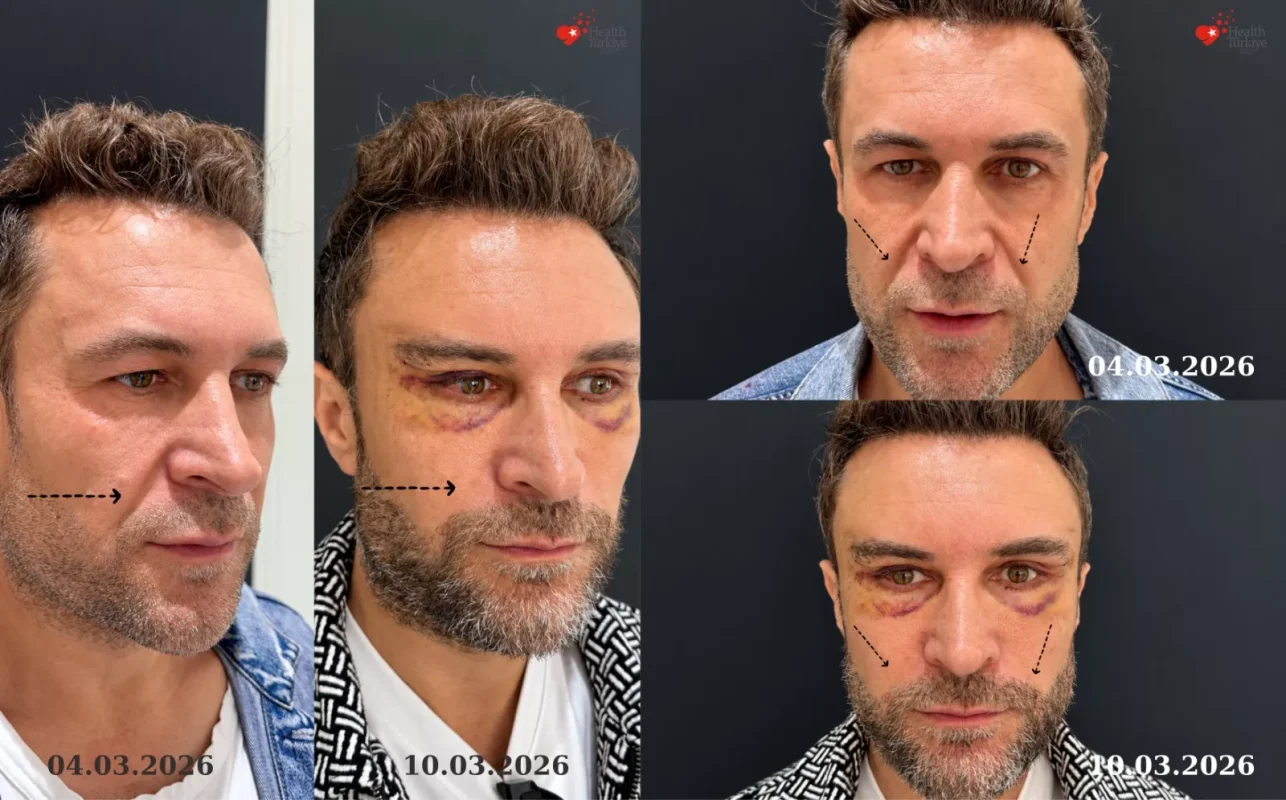
Endoscopic midface lift is a surgical procedure that lifts sagging cheek tissues to reshape the cheekbones and under-eye area. Performed using a camera system called an endoscope, the surgery aims to reduce signs of aging in the middle part of the face.
As we age, cheek tissues may gradually shift downward. This change makes the transition between the lower eyelids and cheeks more noticeable. The folds around the nose may deepen, and fullness over the cheekbones may decrease.
During endoscopic midface lift surgery, descended tissues are repositioned to a higher position. The goal is to create more balanced facial contours and a rested appearance. Understanding how the surgery is performed, the recovery period, possible risks, and expected results is important before undergoing treatment.
What Is an Endoscopic Midface Lift?
An endoscopic midface lift is a surgical procedure that lifts the soft tissues extending from the under-eye area to the cheeks. The procedure primarily targets sagging around the cheekbones and the visible transition between the lower eyelids and cheeks.
The midface is located between the lower eyelids and the upper part of the mouth corners. This area contains skin, fat, muscles, and supporting ligaments. Aging can change the position and volume of these tissues.
The surgery does not simply aim to tighten the skin. Sagging cheek tissues are released and secured in a higher position. This can help create a more defined contour around the cheekbones.
The main feature of the endoscopic technique is the use of a camera system inserted through small incisions. The camera provides a magnified view of the surgical area. This allows the surgeon to examine tissue positions and surrounding anatomical structures in detail.
What Causes Midface Sagging?
Midface sagging can develop due to age-related tissue relaxation, volume loss, and changes in the ligaments supporting the face. Genetics and facial bone structure also play a role in this process.
At a younger age, the fat pads over the cheekbones are generally positioned higher. Over time, some of these tissues may move downward. During the same period, collagen and elastin levels in the skin may decrease.
Common signs of aging in the midface include:
- Sagging cheeks: Downward displacement of the cheek tissues.
- Cheekbone volume loss: A flatter appearance in the upper cheek area.
- Under-eye hollows: A more noticeable boundary between the lower eyelids and cheeks.
- Nasolabial folds: Deepening of the lines extending from the sides of the nose to the corners of the mouth.
- Skin laxity: Reduced skin elasticity, leading to a looser appearance.
Midface sagging does not occur only at an advanced age. It may also develop earlier due to genetic facial structure, rapid weight loss, and connective tissue characteristics.
How Is an Endoscopic Midface Lift Performed?
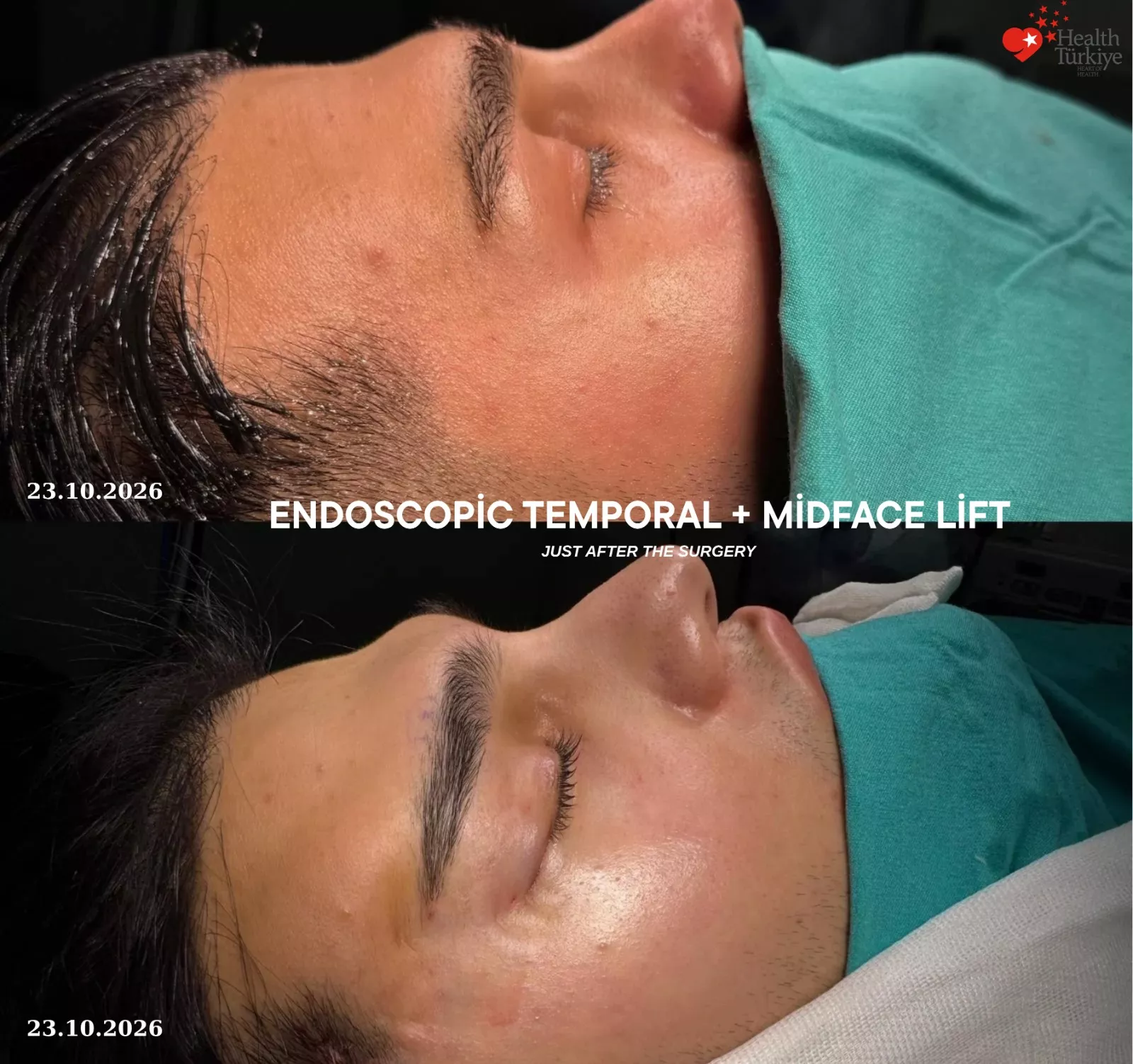
Endoscopic midface lift surgery is performed using a camera and specialized surgical instruments inserted through small incisions. During the procedure, the cheek tissues are released, lifted upward, and secured in their new position.
The surgery is usually performed under general anesthesia. Before the procedure, the surgeon evaluates both sides of the face and plans the direction in which the tissues will be lifted.
The main steps of endoscopic midface lift surgery include:
- Anesthesia: General anesthesia is administered, and surgical preparation is completed.
- Surgical incisions: Small incisions are usually made within the hair-bearing scalp around the temples.
- Endoscope insertion: The camera system is inserted to visualize the surgical area and assess the tissues.
- Tissue release: The supporting ligaments around the cheekbones are released as needed.
- Cheek lifting: Soft tissues that have shifted downward are repositioned higher.
- Tissue fixation: Special sutures or surgical fixation systems may be used to maintain the new position.
- Incision closure: The surgical incisions are closed, and dressings may be applied if necessary.
Some techniques may involve additional incisions inside the mouth. Different surgical approaches may also be used when procedures around the eyes are required.
During surgical planning, anatomical differences between the two sides of the face are considered. The goal is to create a balanced midface appearance without excessive tissue tension.
How Long Does Endoscopic Midface Lift Surgery Take?
Endoscopic midface lift surgery usually takes 2 to 3 hours. The operation may take longer when additional surgical procedures are required. Anesthesia preparation, postoperative monitoring, and hospital stay are not included in this duration. Some patients may be discharged on the same day, while others may need to stay in the hospital overnight for observation.
What Are the Differences Between an Endoscopic Midface Lift and a Traditional Facelift?
An endoscopic midface lift primarily targets the under-eye and cheek areas. A traditional facelift is performed to correct sagging across a larger portion of the face. The endoscopic technique uses a camera inserted through small incisions. Repositioning sagging tissues is the main focus. It may be considered for individuals seeking noticeable improvement in the cheek area.
Traditional facelift surgery focuses on the jawline, lower face, and sometimes the neck. It may involve larger incisions and the removal of excess skin.
| Feature | Endoscopic Midface Lift | Traditional Facelift |
|---|---|---|
| Target area | Cheeks, cheekbones, and under-eye transition | Lower face, jawline, and neck |
| Surgical approach | Endoscopic camera assistance | Direct surgical visualization |
| Incision locations | Usually small incisions within the scalp | Incisions around the ears and along the hairline |
| Main purpose | Lift sagging midface tissues | Correct extensive facial sagging and excess skin |
| Excess skin | May have limitations in cases of significant excess skin | Allows removal of excess skin |
| Recovery | Varies depending on the extent of surgery | Varies depending on the extent of surgery |
For individuals with significant jawline sagging and neck laxity, an endoscopic midface lift alone may not be sufficient. Therefore, these two procedures are not direct alternatives. The appropriate surgical approach depends on the location of sagging and the anatomical structure of the face. Surgical options for the lower face and neck can also be explored under facelift surgery.
Who Is a Good Candidate for an Endoscopic Midface Lift?
An endoscopic midface lift may be considered for individuals with downward displacement of the cheek tissues and a more noticeable under-eye transition.
It is particularly considered when fullness around the cheekbones has decreased and the cheeks appear to sit lower.
People who may be suitable candidates for an endoscopic midface lift include:
- Individuals with mild to moderate sagging in the cheeks.
- People experiencing tissue descent around the cheekbones.
- Those with a more noticeable transition between the lower eyelids and cheeks.
- Individuals with deepening nasolabial folds caused by midface sagging.
- People whose skin retains a certain degree of elasticity.
- Individuals whose general health allows them to undergo surgery.
There is no specific age range for this surgery. Tissue condition, facial anatomy, and the degree of sagging are more important than age alone.
Who Is Not Suitable for an Endoscopic Midface Lift?
An endoscopic midface lift may not provide sufficient improvement for individuals with severe excess skin or those whose primary concern is sagging in the lower face and neck. Uncontrolled serious medical conditions, active infections, and situations involving high anesthesia risks may affect the decision to undergo surgery.
People with bleeding disorders, wound healing problems, or a history of smoking may require additional evaluation. Dry eyes, lower eyelid laxity, and previous surgery around the eyes are also important considerations during surgical planning. Suitability should be determined after a facial and eye examination and a general health assessment.
What Should Be Considered Before an Endoscopic Midface Lift?
Before an endoscopic midface lift, the patient’s medical history, current medications, and previous surgeries are reviewed. During the examination, the surgeon assesses the cheekbone structure, position of the cheek tissues, and characteristics of the under-eye area. The supporting structures of the lower eyelids are also examined.
Important considerations during preoperative preparation include:
- Medication use: All regular medications, vitamins, and herbal supplements should be reported to the doctor.
- Blood thinners: These medications should not be discontinued without medical advice.
- Smoking and nicotine: Stopping nicotine use may be recommended because it can negatively affect wound healing.
- Medical examinations: Required blood tests and anesthesia assessments should be completed.
- Previous procedures: Information about facial fillers, eyelid surgeries, and other aesthetic treatments should be provided.
- Day of surgery: Fasting requirements and other preparations should follow the medical instructions provided.
Expected improvements and the limitations of surgery should also be discussed during the preoperative consultation. Additional concerns, such as under-eye bags and excess skin, should be assessed separately.
What Is the Recovery Process Like After an Endoscopic Midface Lift?
During the initial recovery period after an endoscopic midface lift, swelling, bruising, tenderness, and a feeling of tightness may occur. These symptoms generally decrease over time. Swelling around the cheeks and eyes may be more noticeable during the first few days. Some individuals may experience different levels of swelling on each side of the face. Bruising and significant swelling usually begin to improve within the first two weeks. However, mild swelling and changes in sensation may continue for several months.
Endoscopic Midface Lift Recovery Timeline
| Time Period | What to Expect During Recovery |
|---|---|
| First 1-3 days | Swelling, bruising, tenderness, and tightness may occur. |
| 4-7 days | Swelling and bruising may continue. Light daily activities may be possible. |
| 7-14 days | Significant swelling usually begins to decrease. Returning to social activities may be considered. |
| 2-4 weeks | Daily activities gradually return to normal. Mild facial swelling may remain. |
| 1-3 months | Facial contours become more defined. Tissue tightness may decrease. |
| 3-6 months | Results can be assessed more clearly as the remaining swelling subsides. |
These timeframes represent a general recovery schedule. The extent of surgery and individual tissue characteristics may affect healing speed.
Important precautions during the recovery period include:
- Keeping the head elevated during the first few days.
- Protecting the face from impacts and pressure.
- Avoiding facial massage without the doctor’s approval.
- Avoiding heavy lifting and intense physical exercise.
- Following prescribed medication and wound care instructions.
- Attending scheduled postoperative follow-up appointments.
When Can You Return to Work After an Endoscopic Midface Lift?
Returning to desk-based work is usually possible within 10 to 14 days after an endoscopic midface lift. This period may be longer depending on the degree of swelling and the extent of the surgery. Jobs involving physical effort may require a longer recovery period.
When Can You Exercise After an Endoscopic Midface Lift?
Light walking can usually be resumed early in the recovery period. Returning to strenuous exercise is generally considered after several weeks. Activities such as weightlifting and intense cardio can increase blood pressure. This may affect swelling and the risk of bleeding in the surgical area. Therefore, approval from the surgeon should be obtained before returning to exercise.
When Will Endoscopic Midface Lift Results Become Visible?
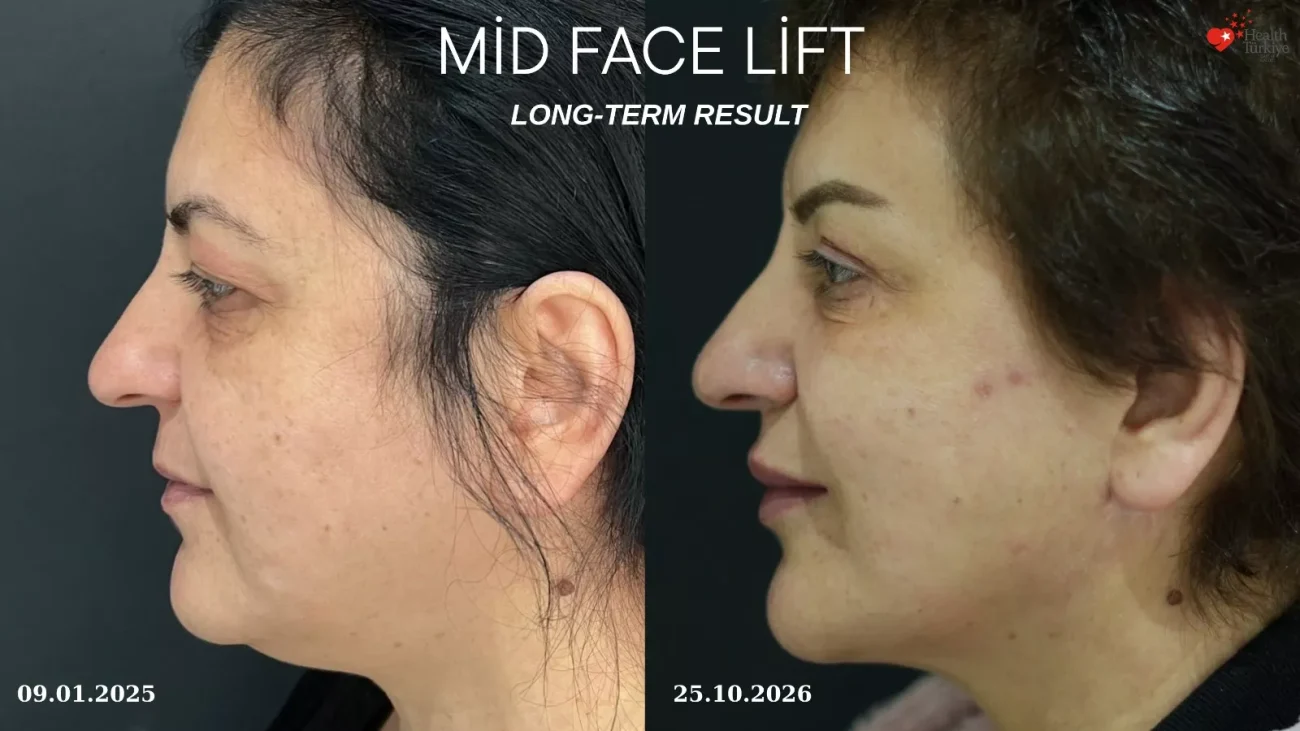
Endoscopic midface lift results become more noticeable as postoperative swelling decreases. The appearance during the first few weeks does not represent the final result. After surgery, the cheek tissues may appear higher. However, swelling can temporarily hide the actual facial contours.
The new facial contours generally become more defined within 2 to 3 months. Minor swelling may take longer to resolve, and the tissues may continue to soften. For some individuals, the final appearance may take 3 to 6 months to assess. Recovery speed is related to the extent of surgery and individual tissue characteristics.
Are Endoscopic Midface Lift Results Permanent?
An endoscopic midface lift can provide long-lasting results. However, because natural aging continues, the appearance achieved through surgery does not remain unchanged throughout life. Age, genetics, skin quality, weight changes, and sun exposure may influence how the results look over time. The repositioned tissues may maintain their position for many years. Nevertheless, new skin laxity can develop. It is not possible to provide an exact duration that applies to every patient.
Can an Endoscopic Midface Lift Correct Under-Eye Bags and Facial Lines?
An endoscopic midface lift can soften the transition between the lower eyelids and cheeks by lifting the cheek tissues. However, it does not correct every under-eye concern on its own. Under-eye hollows may become more noticeable when the cheek tissues move downward. Lifting the midface may help reduce this appearance.
However, true under-eye bags may be associated with fat protruding from the lower eyelids. In such cases, lower eyelid surgery may be considered. Some swelling or bulges over the cheekbones are known as malar edema or festoons. These conditions differ from traditional under-eye bags. For a more detailed understanding, the topic of malar bag surgery is also relevant.
| Facial Concern | Possible Effect of an Endoscopic Midface Lift |
|---|---|
| Sagging cheeks | May help reposition sagging tissues upward. |
| Drooping around the cheekbones | May help create more defined cheek contours. |
| Under-eye hollows | May soften the transition caused by tissue descent. |
| Nasolabial folds | May reduce the depth associated with sagging. |
| Under-eye fat bags | May not be sufficient as a standalone treatment. |
| Fine skin wrinkles | Not directly targeted by the procedure. |
Nasolabial folds, which extend from the sides of the nose to the corners of the mouth, may deepen due to midface sagging. Lifting the cheeks may soften the appearance of these folds. However, complete removal of the lines should not be expected.
What Procedures Can Be Combined with an Endoscopic Midface Lift?
An endoscopic midface lift may be combined with eyelid surgery, brow lifting, or fat transfer in suitable patients. When brow drooping and cheek sagging occur together, an endoscopic brow lift may be considered. This allows the surgical plan to address the balance between the upper and middle parts of the face.
For some individuals, the main concern is volume loss rather than tissue sagging. In these cases, other techniques such as under-eye fat transfer may be considered. Performing multiple procedures during the same operation is not always necessary. Surgical decisions should consider the total operation time, the condition of the eye area, and the patient’s overall health.
What Are the Risks of an Endoscopic Midface Lift?
An endoscopic midface lift is a surgical procedure and carries risks such as bleeding, infection, asymmetry, and nerve injury. Swelling, bruising, numbness, and temporary tenderness may occur after surgery. Some of these symptoms are part of the normal healing process.
Possible risks of endoscopic midface lift surgery include:
- Bleeding and hematoma: Blood may accumulate in the surgical area.
- Infection: An infection may develop at the incision site or in deeper tissues.
- Nerve injury: Temporary or permanent problems affecting facial movement or sensation may occur.
- Asymmetry: Differences in lifting or healing may develop between the two sides of the face.
- Eyelid problems: Unwanted changes in the position of the lower eyelids may occur.
- Wound healing problems: Noticeable scarring or hair loss may develop around the incision sites.
- Dissatisfaction with aesthetic results: The final facial contour may differ from the expected appearance.
The likelihood of these risks depends on the patient’s health, anatomical characteristics, and the extent of the surgical procedure.
Rapidly increasing swelling on one side of the face, severe pain, significant bleeding, or a high fever after surgery requires urgent medical evaluation. Sudden changes in vision or vision loss also require immediate medical attention.
Endoscopic Midface Lift Prices 2027
Endoscopic midface lift prices in Turkey in 2027 range from approximately €6,000 to €7,500.
The price may vary depending on the extent of the surgery, the surgical technique used, and the patient’s facial anatomy. Endoscopic midface lift surgery aims to reposition sagging cheek tissues and support the middle part of the face. Additional procedures, such as eyelid surgery, brow lifting, or fat transfer, may increase the total price. Anesthesia, hospital services, preoperative tests, and postoperative follow-up appointments are also important factors in determining the price. Because each patient’s needs are different, the surgical plan is prepared individually. The final surgery price is determined after a medical consultation and the necessary assessments have been completed.
Frequently Asked Questions
Is Endoscopic Midface Lift Surgery Painful?
Endoscopic midface lift surgery is usually performed under general anesthesia, so patients do not feel pain during the operation. After surgery, tightness, tenderness, and mild to moderate pain may occur. These symptoms can usually be managed with medications recommended by the doctor.
Does an Endoscopic Midface Lift Leave Scars?
Scars may develop at the incision sites after an endoscopic midface lift. However, the incisions are usually placed within the scalp, making them less noticeable from the outside. The appearance of scars depends on skin characteristics and wound healing.
At What Age Can You Have an Endoscopic Midface Lift?
There is no specific age limit that applies to everyone considering an endoscopic midface lift. The decision to undergo surgery depends on facial anatomy, the degree of sagging, and overall health.
Does an Endoscopic Midface Lift Change Your Face Shape?
An endoscopic midface lift may change facial contours by repositioning the cheek tissues. The fullness around the cheekbones and the transition between the lower eyelids and cheeks may become more defined.
What Is the Difference Between an Endoscopic Midface Lift and Cheek Fillers?
An endoscopic midface lift repositions sagging tissues upward. Cheek fillers are non-surgical treatments designed to restore lost volume. The two procedures address different anatomical concerns.
Can an Endoscopic Midface Lift Remove Dark Circles Under the Eyes?
An endoscopic midface lift does not eliminate every type of dark circle under the eyes. Shadowing caused by hollowness may improve. However, dark circles caused by pigmentation, blood vessels, or thin skin may require different treatments.
Does Facial Expression Change After an Endoscopic Midface Lift?
Facial expression may change after an endoscopic midface lift because the position of the cheeks is altered. The aim of the surgery is to improve midface contours while preserving natural facial expressions. However, unwanted tightness or asymmetry may occur.
Will Another Surgery Be Needed After an Endoscopic Midface Lift?
Not every patient needs another operation after an endoscopic midface lift. Because natural aging continues, new sagging may develop over the years. The need for revision surgery is assessed based on the current condition of the face and the patient’s expectations.
Can an Endoscopic Midface Lift Be Performed Without Surgery?
An endoscopic midface lift is a surgical procedure and cannot be performed without surgery. Fillers, energy-based skin tightening treatments, and thread lifts may be used for different purposes. However, these treatments do not provide the same effect as surgically releasing and securing the tissues in a new position.
When Can You Wear Makeup After an Endoscopic Midface Lift?
Returning to makeup depends on incision healing and the doctor’s recommendations. Cosmetic products should generally not be applied to the surgical area during the first few days. Makeup can be resumed after the incisions have healed and the necessary medical approval has been obtained.
Does an Endoscopic Midface Lift Make Your Face Slimmer?
An endoscopic midface lift is not specifically designed to slim the face. Lifting sagging cheek tissues may create a firmer and more defined facial appearance. However, the procedure does not remove cheek fat.
Are an Endoscopic Midface Lift and a Brow Lift the Same Procedure?
An endoscopic midface lift and a brow lift are different surgical procedures that target separate facial areas. A midface lift focuses on the cheeks and under-eye transition. A brow lift adjusts the position of the eyebrows. When necessary, both procedures may be planned during the same operation.