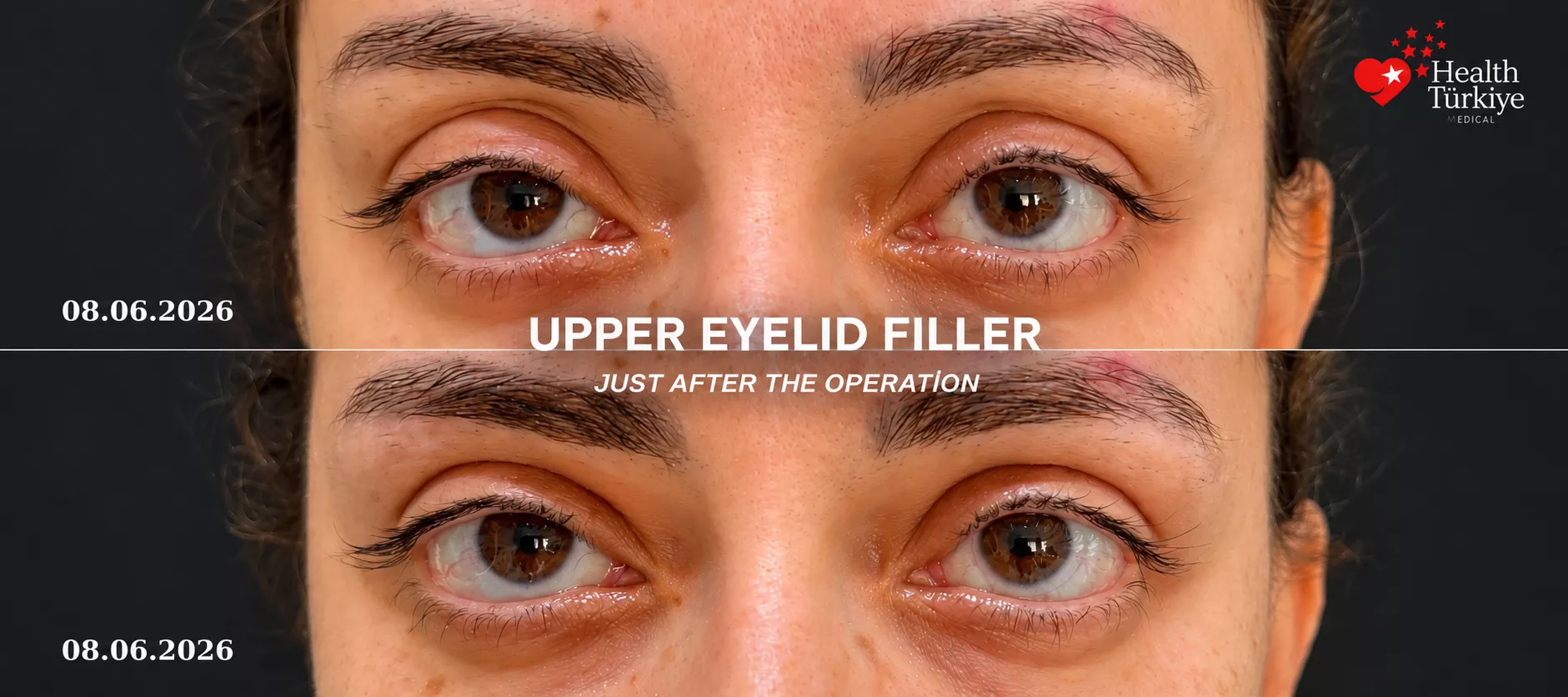
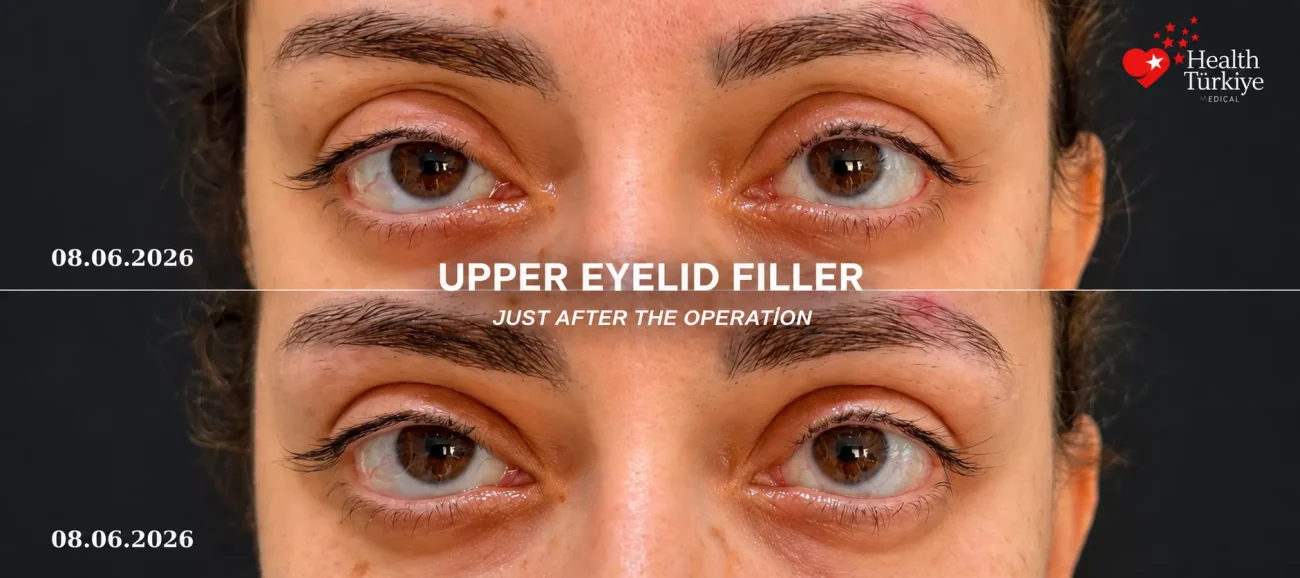
Eyelid filler is a non-surgical aesthetic treatment designed to reduce volume loss and a hollow appearance in the upper eyelids. The procedure generally involves the use of hyaluronic acid-based dermal fillers. The aim is to restore lost volume between the eyelid and eyebrow and create a more balanced appearance around the eyes.
Hollowness in the upper eyelids can develop due to aging, genetic factors, or previous surgical procedures. This may cause the eyes to appear more deeply set and change the overall facial expression.
Eyelid filler is not suitable for every concern affecting the eye area. Skin sagging, drooping eyelids, and under-eye bags require different treatment methods. Therefore, the cause of volume loss should be identified before the procedure.
What Is Eyelid Filler?
Eyelid filler is an injectable treatment used to reduce volume loss in the upper eyelid and the area beneath the eyebrows. Hyaluronic acid-based dermal fillers are generally preferred.
The fatty tissue in the upper eyelid may decrease over time. This change can cause the eyelid to appear more hollow. The natural contour of the eye area may change, especially when the hollow beneath the brow bone becomes more prominent.
In suitable candidates, filler treatment aims to restore some of the lost volume. This may help reduce the sunken appearance of the upper eyelid.
Eyelid filler does not lift the eyelid or remove excess skin. Its primary purpose is to reduce hollowness caused by volume loss.
The eye area has a delicate anatomical structure. Therefore, the eyelid structure, blood vessels, and surrounding tissues must be carefully evaluated before filler treatment.
What Does Eyelid Filler Do?
Eyelid filler may help create a more balanced appearance around the eyes by reducing volume loss in the upper eyelid.
The main goals of the treatment include:
- Reducing hollowness in the upper eyelid.
- Restoring lost volume beneath the eyebrows.
- Softening sharp transitions around the eyes.
- Helping reduce volume differences between the two eyes.
- Improving certain age-related changes in eyelid contours.
Dermal fillers do not remove excess skin. They also cannot treat true eyelid ptosis or problems related to muscle function.
Therefore, the effects of the procedure depend on the underlying cause of the concern around the eyes.

What Causes Hollow Upper Eyelids?
Hollow upper eyelids may develop due to a reduction in fatty tissue around the eyes or changes in the position of surrounding tissues. The appearance of the eyelids does not depend solely on skin structure. Fat distribution, bone structure, eyebrow position, and the position of the eyeball all contribute to the overall appearance.
Factors that may cause upper eyelid volume loss include:
- Aging: The fatty tissue and skin structure around the eyes may change over time.
- Genetic factors: Some people naturally have more hollow upper eyelids.
- Weight loss: Significant weight changes may affect facial fat distribution.
- Previous surgeries: Excessive removal of fatty tissue during eyelid surgery may cause hollowness.
- Facial anatomy: The structure of the brow bone, eyeball, and surrounding tissues may increase the sunken appearance.
Upper eyelid hollowness is not always caused by volume loss. A medical eye examination may be necessary when hollowness develops suddenly, affects only one eye, or becomes progressively worse.
What Is the Difference Between Upper Eyelid Filler and Under-Eye Filler?
Upper eyelid filler targets volume loss beneath the eyebrows. Under-eye filler, on the other hand, aims to reduce hollowness between the lower eyelid and cheek. Both treatments address volume changes around the eyes. However, their treatment areas, anatomical risks, and intended results are different.
| Feature | Upper Eyelid Filler | Under-Eye Filler |
|---|---|---|
| Treatment area | Upper eyelid and area beneath the eyebrow | Lower eyelid and tear trough |
| Main purpose | Reducing upper eyelid hollowness | Reducing under-eye volume loss |
| Desired appearance | More balanced upper eyelid contours | Smoother transition between the lower eyelid and cheek |
| Material used | Generally hyaluronic acid | Generally hyaluronic acid |
| Conditions not treated | Excess skin and true eyelid ptosis | Prominent under-eye bags and pigmentation-related dark circles |
| Treatment planning | Based on upper eyelid anatomy | Based on lower eyelid anatomy |
For under-eye hollows and shadowing, under-eye light filler may be considered as a separate treatment option.
Who Is a Good Candidate for Eyelid Filler?
Eyelid filler may be considered for adults with mild to moderate volume loss in the upper eyelids. It may be particularly suitable for people with noticeable hollowness beneath the eyebrows who do not have significant excess skin.
The following factors are considered when assessing suitability for the procedure:
- The underlying cause of upper eyelid hollowness.
- The thickness and elasticity of the eyelid skin.
- The anatomical distance between the eyebrow and eyelid.
- Previous filler treatments and surgical procedures.
- The eyelid’s ability to open and close normally.
- Dry eye symptoms and existing eye conditions.
Aesthetic appearance alone is not sufficient to determine whether filler treatment is appropriate. Preserving normal eyelid function is also important.
Who Should Not Have Eyelid Filler?
Eyelid filler should not be performed on people with an active infection or significant inflammation in the treatment area. The procedure may not be suitable for individuals with a history of severe allergic reactions to hyaluronic acid filler ingredients. Filler treatment is not recommended during pregnancy or breastfeeding because safety data are limited. People with drooping eyelids, advanced skin sagging, or prominent under-eye bags may require other treatment methods instead of fillers. Medical evaluation should be prioritized if there are unexplained vision problems, sudden changes in eyelid position, or suspected diseases affecting the eye area.
How Is Eyelid Filler Performed?
Eyelid filler is performed by injecting an appropriate dermal filler into a selected tissue layer around the eyes. Before the procedure, the upper eyelid, eyebrow position, and volume distribution around the eyes are examined. The filler product and required amount are then determined.
The procedure generally consists of four stages:
- Consultation and planning: Upper eyelid hollowness is assessed, and the need for filler is determined.
- Skin preparation: The treatment area is cleaned. A local anesthetic may be used when necessary.
- Filler injection: The product is carefully placed into the selected anatomical area in a controlled manner.
- Final assessment: The eyelid contour, symmetry, and possible early side effects are evaluated.
A fine needle or cannula may be used during the injection. However, neither method completely eliminates the risk of vascular occlusion. Because the eyelid has a delicate structure, injecting too much filler may cause swelling and contour irregularities. A controlled and conservative approach is therefore important.
How Long Does Eyelid Filler Take?
Eyelid filler treatment generally takes 15 to 30 minutes, including preparation and injection. The consultation, necessary examinations, and extent of treatment may affect the total duration. A brief assessment may also be required after the procedure.
What Types of Fillers Are Used for Eyelid Filler Treatment?
Hyaluronic acid-based dermal fillers are the most commonly considered products for eyelid filler treatment. Hyaluronic acid is a naturally occurring substance in the body that has the ability to retain water. In dermal filler products, it is used in a specially processed gel form. The properties of the filler selected for the eyelid area are important. Fillers that attract excessive amounts of water may cause prolonged swelling in this region.
One important feature of hyaluronic acid fillers is that they can be broken down with the enzyme hyaluronidase when necessary. However, dissolving a filler does not mean every complication can be completely corrected. Permanent fillers may make complications around the eyes more difficult to manage. Furthermore, not every hyaluronic acid filler is approved for use in the eyelids. The product’s instructions for use and approval status in the relevant country should be checked.
What Should You Consider Before Eyelid Filler Treatment?
Medical history, medications, and previous procedures around the eyes should be evaluated before eyelid filler treatment. People who have undergone eyelid surgery may have changes in their tissue structure. These changes may affect the injection plan.
Important considerations before the procedure include:
- Inform the doctor about regularly used medications and supplements.
- Do not stop taking blood-thinning medications without medical advice.
- Postpone the procedure if there is an active eye infection or skin inflammation.
- Provide information about previous filler treatments and any side effects experienced.
- Inform the doctor about dry eye symptoms and other eye conditions.
The symmetry of both eyelids should be assessed before treatment. Natural anatomical differences may not be completely corrected with fillers.
What Is the Recovery Process Like After Eyelid Filler?
Mild swelling, redness, tenderness, and bruising may occur after eyelid filler treatment. These symptoms generally begin to improve within a few days. Because the eyelid skin is thin, even a small amount of swelling may be noticeable.
| Time | Expected Condition |
|---|---|
| First 24 hours | Mild swelling, tenderness, or redness may occur. |
| 1-3 days | Swelling and bruising may continue. |
| 3-7 days | Temporary symptoms usually begin to improve. |
| 1-2 weeks | The contour created by the filler can be assessed more clearly. |
| Following weeks | A follow-up examination may be needed if swelling or irregularities persist. |
These time frames provide a general overview of the recovery process. Healing may not progress at the same rate for everyone.
What Should You Avoid After Eyelid Filler?
During the first few days after eyelid filler treatment, avoiding pressure on the treated area and limiting intense physical activities is recommended.
The following precautions are particularly important:
- Avoid strenuous exercise during the first 24 hours.
- Do not rub the area around the eyes.
- Do not massage the treated area without medical advice.
- Temporarily limit sauna use, steam baths, and exposure to excessive heat.
- Keep the treatment area clean.
- Seek medical assistance if unexpected pain or skin discoloration occurs.
Aftercare instructions should be based on the properties of the filler product used.
When Will Eyelid Filler Results Be Visible?
Eyelid filler may produce visible changes immediately after treatment due to the volumizing effect of hyaluronic acid. However, the initial appearance may be affected by swelling after the injection. Therefore, the final result should not be assessed immediately.
As swelling decreases, the eyelid contours become more defined. A more balanced appearance may generally develop within the first one or two weeks. Slight differences between the two eyes may remain after the procedure. If necessary, another assessment can be performed after the initial recovery period.
How Long Does Eyelid Filler Last?
Eyelid filler is not permanent. The effects of hyaluronic acid fillers may last for several months and sometimes longer. The eye area has different characteristics from other parts of the face. Therefore, the amount of time the filler remains in the tissue may vary. In some people, visible results may last for 6 to 12 months. However, hyaluronic acid fillers around the eyes are also known to remain in the tissues longer than expected. The main factors affecting filler longevity include the product used, injection depth, and individual tissue characteristics. Another treatment may be considered when the filler effect decreases. However, the condition of the existing filler and changes in eyelid volume should first be evaluated.
How Many Eyelid Filler Sessions Are Needed?
Eyelid filler can often be performed in a single session. However, using the same amount of filler for every patient is not appropriate. Some people may require a follow-up assessment after the initial treatment. The need for additional filler is determined by evaluating the appearance of the existing product and changes in the surrounding tissues.
What Are the Risks and Side Effects of Eyelid Filler?
Temporary side effects of eyelid filler may include swelling, bruising, redness, and tenderness. However, injections around the eyes also carry serious risks. Superficial placement of the filler may create an uneven appearance in the eyelid. In some cases, a bluish discoloration may develop. This is known as the Tyndall effect. Other potential complications after eyelid filler include prolonged swelling, nodule formation, infection, and asymmetry. One of the most serious risks is accidental injection of the filler into a blood vessel. Vascular occlusion may cause skin damage. In rare cases, severe complications such as vision loss and stroke may occur.
The following symptoms require urgent medical assessment:
- Sudden blurred vision or vision loss.
- Severe pain in or around the eye.
- Sudden whitening or purple discoloration of the skin.
- Severe headache or neurological symptoms.
- Rapidly increasing swelling and significant pain after treatment.
Emergency medical assistance should be sought immediately if any of these symptoms occur.
Eyelid filler treatment should be evaluated by a qualified physician who has a thorough understanding of eye area anatomy and can manage potential complications.
What Is the Difference Between Eyelid Filler and Eyelid Surgery?
Eyelid filler reduces volume loss, while eyelid surgery is a surgical procedure performed to correct excess skin and certain anatomical concerns.
These two methods are used to address different needs.
| Feature | Eyelid Filler | Eyelid Surgery |
|---|---|---|
| Procedure type | Injection | Surgery |
| Main purpose | Reducing volume loss | Reshaping skin, fat, and other tissues |
| Anesthesia | Local anesthesia if needed | Local anesthesia or other methods |
| Recovery | Generally shorter | Longer recovery period |
| Duration of results | Temporary | Long-lasting changes |
| Excess skin | Does not remove it | Can be removed when appropriate |
For people with significant excess skin in the upper eyelid, eyelid surgery may be considered.
Eyelid filler and blepharoplasty are not direct alternatives to each other. The appropriate treatment depends on whether the concern is caused by volume loss or tissue sagging.
What Are the Alternatives to Eyelid Filler?
In addition to eyelid filler, fat injections and surgical procedures may be considered for certain volume-related concerns around the eyes. Fat injection involves using fatty tissue taken from the patient’s own body. This method may be used to restore volume in selected areas. However, the amount of transferred fat that will survive cannot be predicted with certainty. Fat injections around the eyes also carry their own risks, including serious vascular complications. Under-eye fat injection, which targets volume loss beneath the eyes, is a different procedure. If significant excess skin or functional problems are present in the upper eyelid, surgical treatment may be more appropriate.
Eyelid Filler Prices 2027
Average eyelid filler prices in 2027 range from €320 to €370, approximately 18,000 TL to 20,000 TL. Eyelid filler prices are determined by the type of hyaluronic acid filler used, the amount of product required, and the extent of treatment. The degree of volume loss in the upper eyelid may affect the amount of filler needed. Treatment of a single eyelid and treatment of both eyelids may have different prices. The filler brand and necessary follow-up appointments may also be included in the total price.
The stated 2027 prices represent an approximate range. The euro and Turkish lira amounts may vary depending on exchange rates. Before the procedure, eyelid anatomy, volume loss, and the filler product to be used are evaluated. The final eyelid filler price is determined after the treatment plan has been established.
Frequently Asked Questions
Does Eyelid Filler Lift the Eyelids?
Eyelid filler does not treat true eyelid ptosis. It may reduce a hollow appearance caused by volume loss. If the function of the muscle responsible for lifting the eyelid is impaired, different treatment methods are required.
Is Eyelid Filler Painful?
A mild pinching or pressure sensation may occur during eyelid filler treatment. Local anesthetic products can be used when necessary. Temporary tenderness may develop after the procedure.
Can Eyelid Filler Damage the Eyes?
Eyelid filler may cause serious eye complications. Accidental injection of filler into a blood vessel can rarely lead to vision loss. Therefore, the risks must be carefully assessed before treatment.
Can Eyelid Filler Be Dissolved?
Hyaluronic acid-based eyelid fillers can be broken down using the enzyme hyaluronidase in appropriate cases. However, dissolving the filler does not eliminate every possible complication. Emergency treatment is particularly important when vascular occlusion is suspected.
Do the Eyes Swell After Eyelid Filler?
Temporary swelling may occur after eyelid filler treatment. Because the eyelid skin is thin, even mild swelling can be noticeable. Medical evaluation is necessary if swelling persists or becomes worse.
Can Eyelid Filler Remove Dark Circles?
Eyelid filler does not directly treat dark circles caused by pigmentation or blood vessel structure. It may reduce shadows caused by volume loss. If dark circles have another underlying cause, different treatments may be necessary.
When Can You Return to Work After Eyelid Filler?
Many people can return to their daily activities shortly after eyelid filler treatment. However, bruising and swelling may continue for several days. Returning to work depends on the severity of symptoms and the nature of the person’s job.
Can You Wear Makeup After Eyelid Filler?
The injection sites should be kept clean after eyelid filler treatment. Waiting at least 24 hours before applying makeup is generally recommended. A longer waiting period may be necessary if tenderness or redness remains around the injection sites.
Can Eyelid Filler Correct Asymmetry?
Eyelid filler may reduce certain asymmetries caused by differences in volume. However, it may not completely correct differences related to eyelid shape, muscle function, or bone structure.
Are Eyelid Filler and Botox the Same Treatment?
Eyelid filler and Botox are different treatments. Fillers aim to restore lost volume, while Botox temporarily reduces the movement of certain muscles. The treatment areas and potential risks of these procedures are different.
Can Eyelid Filler Migrate After Treatment?
The position of the filler may change after eyelid filler treatment. This can cause swelling, irregularities, or unwanted fullness. If such a problem develops, a follow-up examination is necessary.
Can Eyelid Filler Be Permanent?
Temporary hyaluronic acid products are generally preferred for eyelid filler treatment. Complications associated with permanent fillers around the eyes may be more difficult to manage. Therefore, permanent filler products are not recommended as a standard treatment option.