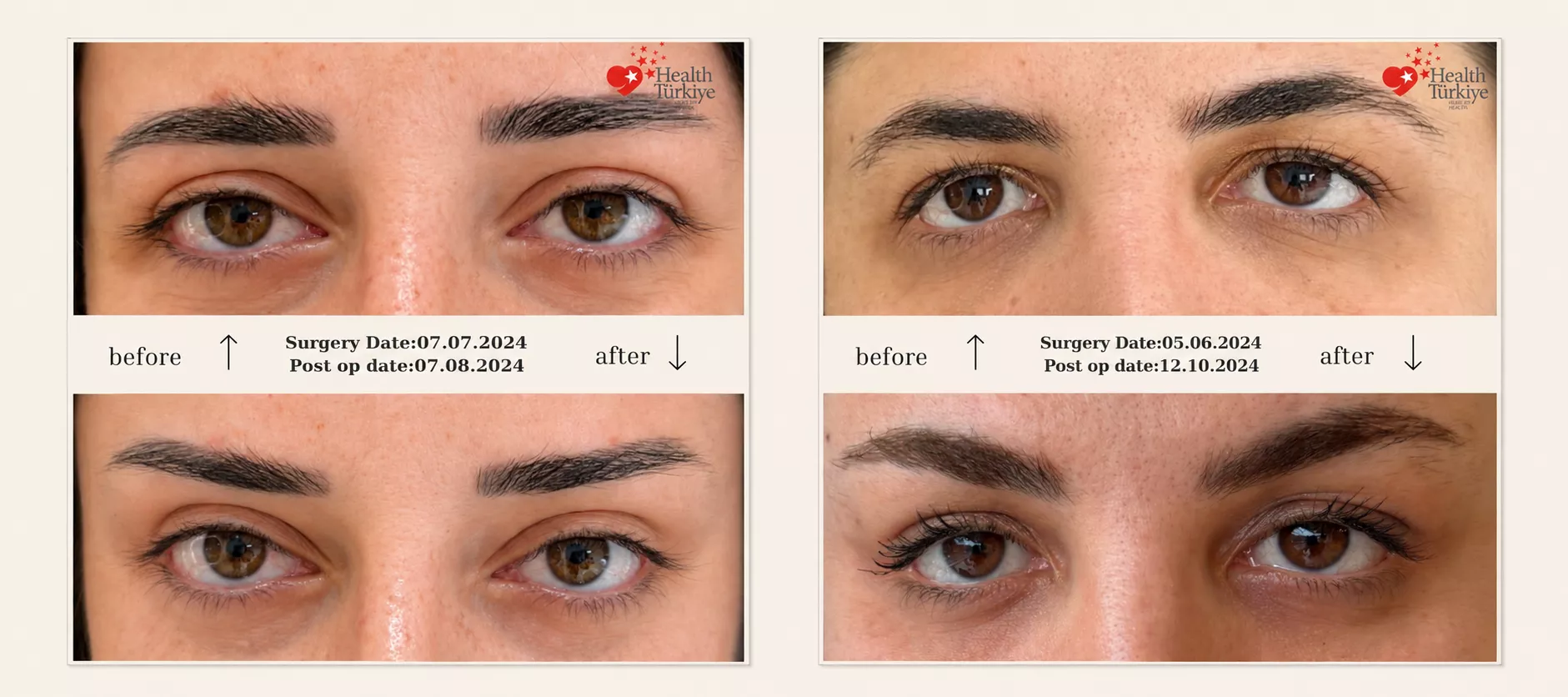
What Is Almond Eye Surgery and Who Is It Suitable For?
Almond eye surgery is an aesthetic eyelid procedure designed to create a gently elevated outer eye corner and a more defined, balanced eye shape. The aim is not to produce an exaggerated change, but to achieve a refreshed expression that remains harmonious with the patient’s natural facial proportions.
The procedure is commonly associated with canthoplasty, a surgical technique that reshapes or supports the tissues at the outer corner of the eye. Because every eye has a different structure, the amount of lift, the direction of the new eye angle, and the surgical plan should be personalized after a detailed examination.
What Is Almond Eye Surgery?
The point where the upper and lower eyelids meet at the outer corner is called the lateral canthus. Its position has an important effect on whether the eyes appear lifted, straight, or downward-slanting. Almond eye surgery focuses on this area by repositioning and supporting the lateral canthal tissues.
In suitable patients, this adjustment can create a more open and energetic expression, improve the appearance of mild lower-eyelid laxity, and bring the eyes into better balance with the brows, cheeks, and overall facial structure. The objective is a natural transition rather than a sharply pulled or artificial look.
How Is Almond Eye Surgery Performed?
The operation is planned according to the patient’s eyelid support, existing eye angle, skin quality, facial symmetry, and desired result. It is often performed under local anesthesia; sedation or a different anesthesia plan may be considered when appropriate.
Through a small incision placed near the outer corner of the eye, the surgeon carefully reshapes, tightens, or repositions the supporting connective tissues. Fine sutures are then used to stabilize the new position. In selected cases, the procedure may take approximately 30–45 minutes, although the total duration varies according to the technique and whether another eyelid procedure is performed at the same time. Patients can usually return home on the same day after the recommended observation period.
Canthoplasty and Canthopexy: What Is the Difference?
The term almond eye surgery is sometimes used broadly for more than one outer-eyelid technique. Canthoplasty generally involves reshaping or reconstructing the lateral canthal tendon, while canthopexy provides additional support without the same degree of tendon reconstruction. The most appropriate method depends on eyelid laxity, anatomy, and the amount of change required; it can only be selected after an in-person assessment.
What Can Almond Eye Surgery Improve?
Depending on the individual anatomy and treatment plan, almond eye surgery may help address:
- Naturally downward-slanting or low-set outer eye corners
- A tired, sad, or less energetic eye expression
- Mild laxity or sagging around the outer lower eyelid
- Differences between the right and left eye angles
- A desire for a more defined, elongated, and balanced eye contour
The procedure does not change every feature around the eyes and cannot guarantee perfect symmetry. Its value lies in creating a proportionate improvement that suits the whole face.
Who Is Almond Eye Surgery Suitable For?
Almond eye surgery may be considered for adult women and men who:
- Have naturally downward-slanting or low-positioned outer eye corners
- Notice age-related loosening or sagging around the outer eyelid
- Feel that their eyes create a persistently tired or sad expression
- Would like a longer-lasting change than makeup or temporary lifting methods can provide
- Have mild facial or eye-shape asymmetry that may be improved surgically
- Are in suitable general health, do not have an active eye problem, and have realistic expectations
Suitability is determined by examination rather than appearance alone. Eyelid tone, tear-film quality, previous eye surgery, facial bone structure, and the relationship between the eyelid and the eyeball all influence the treatment plan.
Who May Need Additional Evaluation?
Patients with active eye infection or inflammation, significant dry-eye symptoms, uncontrolled medical conditions, healing problems, or a history of complex eyelid surgery may need additional assessment or treatment before a cosmetic procedure is considered. People who expect an extreme transformation or absolute symmetry should also discuss their goals carefully during consultation. In some cases, postponing surgery or choosing a different approach may be safer and more appropriate.
What Happens Before the Procedure?
A detailed consultation helps the surgeon create a safe and realistic plan. During this appointment, patients should be prepared to discuss:
- Current medical conditions, allergies, and previous operations
- Prescription medicines, over-the-counter products, and supplements
- Dry eye, contact-lens use, vision problems, or earlier eye treatments
- Smoking and other factors that may affect healing
- The desired eye angle and the degree of change that would look natural
Preoperative photographs and facial measurements may be used for planning. Medication changes should only be made when instructed by the treating physician. Patients should also follow the clinic’s guidance about eating, drinking, transportation, and aftercare arrangements.
Recovery and Aftercare
Mild swelling, bruising, tightness, watering, or temporary irritation can occur during the first days. These effects generally improve gradually. The visible recovery period varies, but many patients feel comfortable returning to routine social activities within about one to two weeks. Complete settling of the tissues takes longer.
To support healing, patients are commonly advised to:
- Use cold compresses and prescribed products exactly as directed
- Keep the head elevated during the early recovery period
- Avoid rubbing or placing pressure on the eyes
- Pause eye makeup, contact lenses, strenuous exercise, and swimming until medically cleared
- Attend scheduled follow-up visits and report unusual or worsening symptoms promptly
The exact instructions, timing of suture removal, and return to work depend on the technique used and the patient’s healing response. The surgeon’s individualized recommendations should always take priority over general online information.
When Do the Results Become Visible?
An early change in the eye angle may be noticeable soon after surgery, but swelling can temporarily affect shape and symmetry. The result becomes clearer as the tissues settle over the following weeks, while scar maturation and final refinement may continue for several months. Results can be long-lasting, although natural aging, skin quality, lifestyle, and individual tissue characteristics continue to influence the eye area over time.
Possible Risks and Considerations
As with every surgical procedure, almond eye surgery has potential risks. These may include bleeding, infection, visible or firm scarring, prolonged swelling, eye irritation or dryness, asymmetry, undercorrection or overcorrection, recurrence, eyelid malposition, and the possible need for revision. Careful patient selection, precise surgical planning, and appropriate follow-up help reduce these risks, but no surgical result can be guaranteed.
Frequently Asked Questions
Is almond eye surgery painful?
Local anesthesia is used to minimize discomfort during the operation. After surgery, patients may experience mild soreness, tightness, or sensitivity rather than severe pain. Any prescribed medication should be used according to the physician’s instructions.
Will there be a visible scar?
The incision is generally placed close to the natural outer-eye crease. Scars are usually less noticeable as healing progresses, but scar quality varies from person to person. Proper wound care and sun protection are important parts of recovery.
How long does recovery take?
Initial swelling and bruising often improve within the first one to two weeks. Patients may return to desk-based work earlier or later depending on their comfort, the extent of surgery, and their surgeon’s advice. Final tissue settling takes longer than the visible recovery period.
Is almond eye surgery permanent?
The operation creates a structural change and may provide a long-lasting result. However, no aesthetic procedure stops the natural aging process. Changes in skin elasticity, facial tissues, and lifestyle can affect the appearance over time.
Can men have almond eye surgery?
Yes. The procedure may be suitable for both women and men. Planning is based on individual anatomy and facial proportions so that the result supports the patient’s features without creating a standardized or overly feminine appearance.
About the Physician
I am Op. Dr. Yıldız Acar Ebcim. At my Kadıköy clinic, I evaluate each patient’s eye anatomy, eyelid support, facial proportions, and aesthetic expectations in detail. My goal is to create a treatment plan focused on a natural, balanced result while protecting the function and comfort of the eyelids.
Contact & Appointment
If you would like to learn whether almond eye surgery is appropriate for your eye structure, we would be happy to welcome you to our Kadıköy clinic for a personalized consultation. During the examination, your concerns, expectations, possible alternatives, recovery process, and individual risk factors can be discussed in detail. Schedule your consultation today.
Aşağıda yer alan WhatsApp hatlarımız üzerinden, tüm sorularınız için hızlı ve güvenilir bir şekilde bize ulaşabilirsiniz.
📱 Türk Ziyaretçiler İçin WhatsApp 🌍 International WhatsApp Line