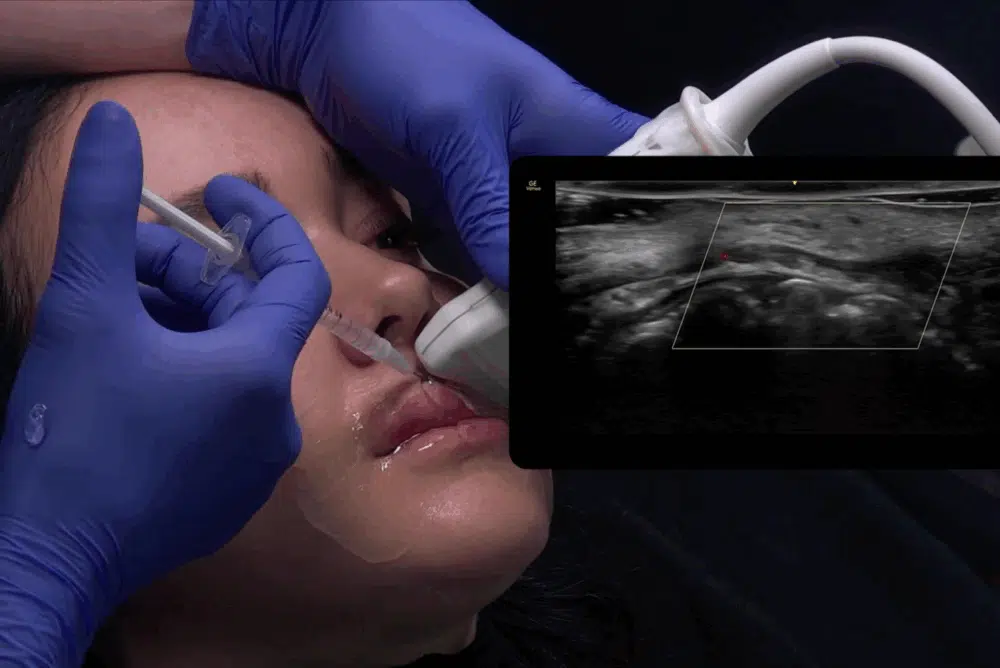
Dissolving Incorrectly Applied Filler with Ultrasound
Dissolving incorrectly applied filler with ultrasound is the process of visualizing the location of the filler and dissolving it in a controlled way with hyaluronidase.
In this method, a medical ultrasound device clearly shows the depth and spread of the filler. This allows incorrectly applied lip filler or under-eye filler to be dissolved from the right point. Ultrasound-guided filler dissolving is safer and more targeted. It is especially preferred in cases of vascular compression or lumping. The hyaluronidase enzyme used breaks down hyaluronic acid-based filler.
What Is Ultrasound-Guided Filler Dissolving?
Ultrasound filler dissolving is a method of visualizing the location, depth, and sometimes the spread pattern of filler material under the skin with high-frequency ultrasound, and then planning the dissolving procedure accordingly. For fillers containing hyaluronic acid, the most commonly used solution is filler dissolving with an enzyme called hyaluronidase. Ultrasound provides guidance when deciding where this enzyme should be applied.
There is a critical distinction here: Hyaluronidase can dissolve hyaluronic acid fillers; however, not every type of filler can be dissolved with an enzyme. Therefore, ultrasound not only helps locate the target but can also give the clinician clues about the structure of the filler, making the plan more realistic.
What Does Incorrect Filler Mean and Why Does It Occur?
Incorrect filler does not always mean a poorly performed procedure. Sometimes the dose is excessive and facial proportions are disrupted. Sometimes, even if the product is correct, the wrong layer is chosen and the filler remains close to the surface, creating a bluish reflection. Sometimes the filler migrates over time, especially in the lips, crossing the border and creating a full, artificial ring-like appearance around the mouth.
Complaints about incorrect filler generally fall under a few categories: asymmetry, a feeling of lumpiness, hardening of facial expression, swelling, a bag-like appearance in the under-eye area, a noticeable line or shadow under the skin. Not all of these situations mean that the person is a candidate for filler dissolving, but looking with ultrasound often shows the source of the problem more clearly.
Advantages of Ultrasound in Filler Correction
The biggest advantage of ultrasound is that it makes the invisible visible. Sometimes the filler is not directly under the visible swelling; it may have shifted to the side, spread deeper, or accumulated in a different layer. In the process of dissolving incorrectly applied filler, ultrasound reduces unnecessary attempts and increases targeted intervention.
Another advantage is safety. Vascular structure in the face varies from person to person. Vascular mapping and filler detection with ultrasound support a more cautious approach, especially in risky areas. This approach has increased the value of ultrasound both in filler applications and in complication management.
In Which Cases Is Ultrasound-Guided Filler Dissolving Preferred?
Ultrasound-guided filler dissolving is most often preferred when it is not clearly understood where the filler is located. For example, if there is under-eye swelling but it is unclear whether it is filler, edema, or tissue sagging, the ultrasound image provides guidance. Similarly, if there is a lump sensation in the lip, it is necessary to distinguish whether the lump is filler or scar tissue.
Another important area of use is filler complications. Although rare, circulatory impairment due to vascular occlusion may develop, and rapid intervention is vital. In some cases, ultrasound is discussed as a helpful tool for showing signs of filler-related blockage inside the vessel and guiding targeted hyaluronidase application.

Why Is Time So Important When Vascular Occlusion Is Suspected?
After filler, symptoms such as severe pain, rapidly increasing paleness, bruising, a feeling of coldness, or net-like darkening of the skin color require urgent evaluation. Waiting at home in such a situation is not correct. Clinical guidelines emphasize that rapid diagnosis and rapid treatment are critical in the management of vascular occlusion.
Here, ultrasound is not a treatment; in some centers, it is positioned as a diagnostic and guiding tool. The main goal is to bring the suspicious situation to a healthcare professional without delay and apply appropriate emergency protocols.
How Is the Pre-Procedure Evaluation Performed?
A good filler correction plan first asks the right question: Is the filler really in the wrong place, or is there tissue swelling? Ultrasound-guided evaluation helps roughly understand the amount of filler, see its spread, and establish the intervention plan more clearly.
At this stage, the type of filler is also decisive. If it is a hyaluronic acid filler, filler dissolving with an enzyme comes to the agenda. For non-hyaluronic acid fillers, the approach may be different, and dissolving may not be possible in every case. Therefore, previous procedure information, the person’s statements, and examination findings are brought together.
How Does Ultrasound-Guided Filler Dissolving with Hyaluronidase Progress?
After the filler is visualized with ultrasound, the target area is determined and hyaluronidase application is planned in a more precise way. The goal here is to achieve the greatest benefit with the least possible intervention. Because applying enzyme unnecessarily over a wide area may create an unwanted perception of volume loss.
Scientific publications emphasize that hyaluronidase is the main tool in dissolving hyaluronic acid fillers and plays an important role in reversing complications. Ultrasound guidance, on the other hand, aims to make this dissolving process more targeted by clarifying the location of the filler.
How Many Sessions Are Needed and When Is the Effect Seen?
In the process of dissolving incorrectly applied filler with ultrasound, the number of sessions depends on the amount, depth, and spread of the filler. While some people experience noticeable relief with a single session, in some cases gradual dissolving gives a better result. A gradual approach can provide a more natural appearance, especially in areas that affect facial proportions, such as the lips and under-eyes.
The duration of effect also varies. Some people notice the change on the same day, while others see it more clearly within a few days. Here, edema, bruising, and tissue reaction affect perception. Therefore, instead of making a final judgment in front of the mirror immediately after the procedure, it is healthier to wait for the tissue to calm down.
The Importance of Ultrasound in the Under-Eye Area
Under-eye filler problems are one of the areas that create the most confusion. Because swelling under the eyes is not always filler; a tendency to fluid retention, allergies, lack of sleep, tissue laxity, and pigment changes can also create a similar appearance. Ultrasound can reduce the risk of unnecessary dissolving by showing where the filler actually stands.
In addition, because the under-eye skin is thin, if the filler is close to the surface, a bluish reflection may be seen. In this case, finding the target correctly offers a chance for a cleaner correction. Ultrasound often becomes a valuable guide in planning the correction of incorrectly applied under-eye filler for this reason.

Migration and Lumping Problems in Lip Filler
The most common complaint in lip filler is that the filler crosses the border and creates overflow along the upper lip line. Sometimes the person thinks there is only excess volume, whereas the real problem is that the filler has accumulated in the wrong layer. Ultrasound can clarify the target by showing the position of the filler in relation to the lip border.
A similar situation applies to the feeling of lumpiness. The hardness felt by hand may sometimes be filler and sometimes a tissue reaction. Before deciding to dissolve incorrect filler, looking with ultrasound can reduce unnecessary intervention and help create a more accurate plan.
How Should Post-Procedure Care Be?
Post-filler dissolving care aims to keep the skin calm. In the first days, factors such as excessive heat, intense exercise, and rubbing the area harshly may increase swelling. Gentle cleansing and a simple routine are usually sufficient. If you are prone to bruising, sun protection also improves the quality of healing.
The most important point is to know that it may be normal for the area to look different every day. Fluctuations may occur, such as a swollen appearance on the first day, a more deflated appearance on the second day, and mild edema again on the third day. As the tissue calms down, the real result becomes clearer.
Risks and Things to Consider
Although ultrasound-guided filler dissolving aims to increase safety, the procedure is not completely risk-free. The most common conditions are swelling, redness, bruising, and sensitivity. More rarely, allergic reactions may occur. Therefore, the procedure should be planned under medical conditions where emergency intervention is available.
Another important issue is the possibility of excessive dissolving. Since some people get used to the volume provided by the filler, they may feel as if the area has collapsed when the filler dissolves. This is not always a permanent problem; however, proceeding gradually reduces this perception and risk.