

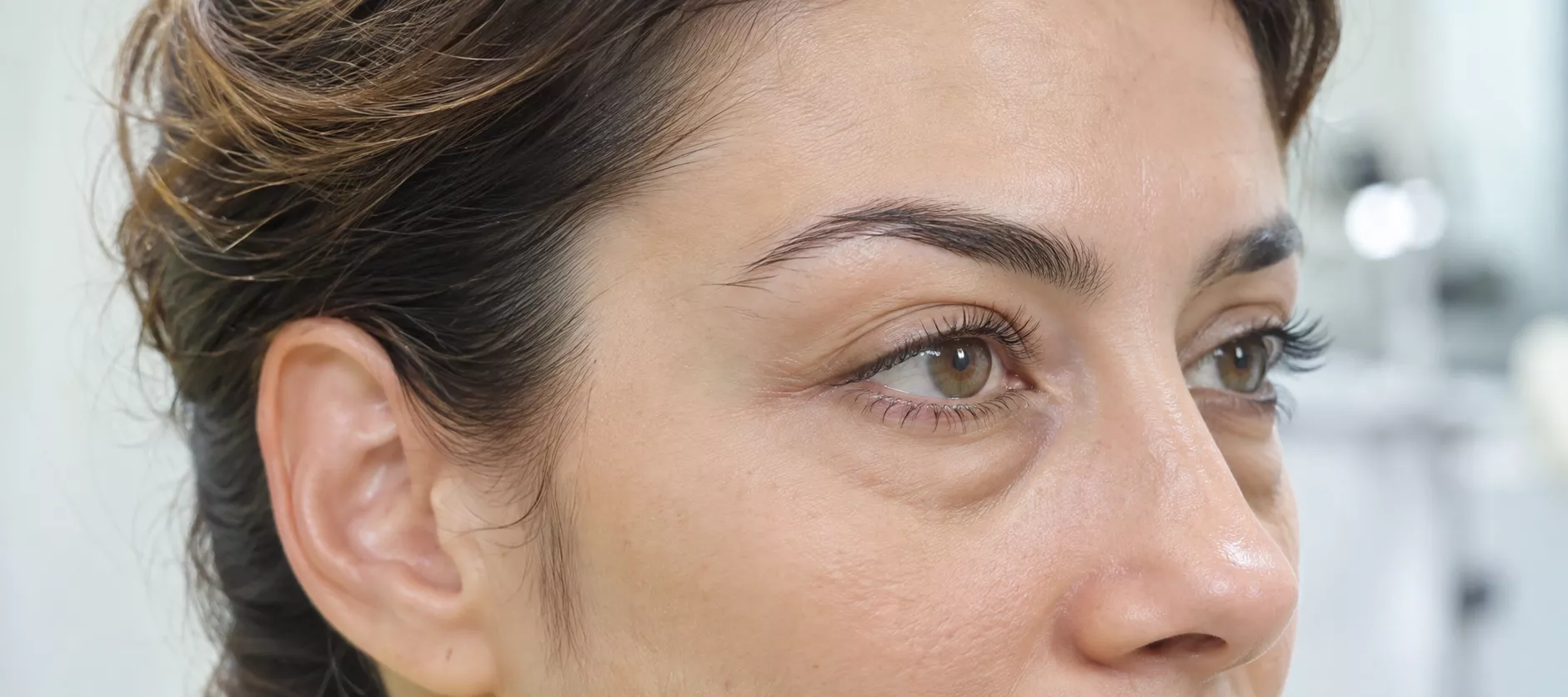
This procedure is particularly preferred for individuals with prominent under-eye fat bags but without significant skin sagging. During surgery, protruding fat tissue may be reduced or repositioned into hollow areas beneath the eyes. The goal is to create a smoother and more balanced transition between the lower eyelid and the cheek.
The technique used in stitchless under-eye bag surgery, the recovery period, and the results that can be achieved depend on the anatomical structure of the eye area.
What Is Stitchless Under-Eye Bag Surgery?
Stitchless under-eye bag surgery is a lower eyelid aesthetic procedure in which fat tissue is rearranged through an incision made on the inner surface of the eyelid. During the procedure, a small incision is created in the conjunctiva, the thin tissue covering the inner surface of the eyelid.
Through this incision, the surgeon accesses the fat pads beneath the eyes. Fat tissue that has become visibly prominent can be carefully reduced. In individuals with under-eye hollows, the existing fat tissue may be repositioned into a more suitable area.
The procedure is called stitchless because there is no external skin incision requiring stitches. The incision on the inner surface often heals on its own. However, some techniques may involve the use of dissolvable internal sutures.
This technique is part of general eyelid surgery procedures. However, not all lower eyelid surgeries are performed using the same technique.
What Causes Under-Eye Bags?
Under-eye bags may develop when the fat tissue surrounding the eyes becomes more prominent and the supporting structures gradually weaken. Although aging is an important factor, genetic predisposition can cause under-eye bags to appear at a younger age.
Fat pads surrounding the eyeball help absorb impacts and support eye movement. When the structures holding these fat pads in place become loose, bulging may develop in the lower eyelid.
However, not every type of swelling beneath the eyes is caused by fat bags. Irregular sleep, allergies, fluid retention, and certain medical conditions can also cause swelling around the eyes.
Under-eye bags caused by fat tissue generally remain noticeable throughout the day. Swelling caused by fluid accumulation may be more pronounced in the morning and gradually decrease during the day.
Bulges located over the upper part of the cheekbone are also different from traditional under-eye bags. These conditions, known as malar edema or festoons, are evaluated separately within the scope of malar bag surgery.
Who Is a Suitable Candidate for Stitchless Under-Eye Bag Surgery?
Stitchless under-eye bag surgery is suitable for individuals with prominent fat bags beneath the eyes and sufficiently firm lower eyelid skin.
This technique may be considered particularly for younger and middle-aged individuals who develop genetically related under-eye bags before significant skin laxity occurs. However, age alone is not the determining factor.
The following characteristics are considered when assessing suitability for surgery:
-
The bulging beneath the eyes is caused by fat tissue.
-
There is no significant excess skin on the lower eyelids.
-
The lower eyelids have adequate support and firmness.
-
The ocular surface and tear film are suitable for surgery.
-
The patient’s general health does not prevent surgery.
Fat repositioning may also be considered for individuals who have under-eye hollows along with prominent fat bags.
Who Is Not a Suitable Candidate for Stitchless Under-Eye Bag Surgery?
For individuals with significant skin sagging, advanced eyelid laxity, or excessive skin folds, surgery performed only through the inner eyelid may not be sufficient.
Uncontrolled dry eye, active eye infections, certain thyroid eye diseases, and serious medical conditions may affect the surgical plan. Individuals with bleeding disorders also require a detailed assessment.
A tendency for the lower eyelid to turn outward, prominent eyeballs, or weakened eyelid support may require additional surgical precautions.
How Is Stitchless Under-Eye Bag Surgery Performed?
Stitchless under-eye bag surgery is performed through a small incision on the inner surface of the lower eyelid. The surgeon accesses the fat tissue through this incision and makes the necessary adjustments according to the surgical plan.
Before surgery, the structure of the eye area is examined. The locations of the fat bags, under-eye hollows, and lower eyelid support are evaluated.
Local anesthesia, sedation, or general anesthesia is then administered when necessary. The lower eyelid is carefully turned outward to access the surgical area on its inner surface.
Removing all the fat tissue is not always the goal. Excessive fat removal may create an unwanted hollow appearance beneath the eyes. For this reason, the existing fat tissue may be preserved and redistributed.
Once the procedure is completed, the internal incision may be left to heal naturally or closed with dissolvable sutures. No stitches are placed on the outer skin.
What Is Under-Eye Fat Repositioning?
Fat repositioning is a technique in which protruding fat tissue beneath the eyes is moved toward hollow areas instead of being removed.
Some individuals have a noticeable groove directly below the under-eye bag. This groove is known as the tear trough. When fat bags and hollows appear next to each other, the difference in height between these areas may become more noticeable.
Fat repositioning aims to create a smoother transition by making use of the existing fat tissue.
This procedure is not the same as under-eye fat injection, which involves transferring fat from another part of the body. Fat repositioning uses the fat already present around the eyes.
Differences Between Stitchless and Traditional Under-Eye Bag Surgery
The main difference between stitchless and traditional under-eye bag surgery is the location of the surgical incision.
In the transconjunctival technique, the incision is made on the inner surface of the eyelid. In the traditional external approach, the incision is generally made just below the lower eyelashes.
| Feature | Stitchless Technique | Traditional Technique |
|---|---|---|
| Incision location | Inner surface of the eyelid | Near the lower lash line |
| Externally visible scar | No skin incision scar forms | A scar may form along the incision line |
| Removal of excess skin | Not suitable as a standalone technique | Excess skin can be removed |
| Fat tissue adjustment | Possible | Possible |
| Fat repositioning | Possible | Possible |
| Skin sagging | Should not be significant | May be preferred when excess skin is present |
| Sutures | Internal sutures may be required | External skin sutures may be required |
The stitchless technique allows for a more limited intervention on the external eyelid tissues. However, this does not mean it is superior or safer for every patient. The anatomy of the lower eyelid determines which surgical technique is appropriate.
How Long Does Stitchless Under-Eye Bag Surgery Take?
Stitchless under-eye bag surgery generally takes 30 to 60 minutes when only the fat bags are treated. The procedure may take longer if fat repositioning or additional surgical steps are required.
The duration of surgery depends on the extent of the adjustments needed in both lower eyelids. Supporting the lower eyelid or combining the procedure with another surgery may require a longer operation.
The procedure is usually planned as day surgery. Patients in suitable general health may be discharged on the same day after postoperative observation has been completed.
What Should Be Considered Before Stitchless Under-Eye Bag Surgery?
Eye health and eyelid structure must be evaluated before surgery. This examination does not focus solely on the appearance of under-eye bags.
Tear production, eyelid movement, the ability to close the eyes, and lower eyelid firmness are also examined. Previous eye surgeries and aesthetic procedures may influence the surgical plan.
It is important to inform the doctor about all medications used during the preparation period. Blood thinners, certain painkillers, and herbal supplements may increase the risk of bleeding. However, regularly prescribed medications should not be discontinued without medical advice.
Smoking, diabetes, and other medical conditions that may affect wound healing are also assessed. Patients should follow the instructions provided regarding makeup and contact lens use on the day of surgery.
Recovery Process After Stitchless Under-Eye Bag Surgery
Swelling, bruising, and mild tenderness may occur during the first few days after stitchless under-eye bag surgery. These symptoms generally decrease over time.
Healing takes place on the inner surface of the eyelid, where it is not visible from the outside. However, the absence of an external incision does not mean that swelling or bruising around the eyes will not occur.
| Recovery Period | Expected Changes |
|---|---|
| First 24-48 hours | Swelling, tenderness, and mild tearing may occur. |
| 3-5 days | Bruising may become more noticeable. Swelling may begin to decrease. |
| 7-10 days | Many patients can return to light daily activities. |
| 10-14 days | A significant portion of the initial bruising and swelling may subside. |
| 3-4 weeks | The under-eye appearance becomes more natural. |
| 2-3 months and beyond | The results become clearer as the remaining swelling subsides. |
During recovery, it is important to avoid rubbing the eyes, keep the head slightly elevated, and use prescribed medications regularly.
Cold compresses may be applied during the first few days as recommended by the doctor. Patients should obtain their surgeon’s approval before returning to strenuous exercise, activities that involve bending forward, or swimming.
The appropriate time to resume contact lens use and eye makeup also depends on the healing process. Most patients can largely return to their normal daily routines within a few weeks.
What Are the Risks of Stitchless Under-Eye Bag Surgery?
As with other surgical procedures, stitchless under-eye bag surgery carries risks such as bleeding, infection, and wound healing problems.
Temporary dry eyes, a stinging sensation, excessive tearing, and blurred vision may occur after surgery. Temporary or permanent asymmetry between the two eyes is also possible.
Removing too much fat tissue may result in a hollow appearance beneath the eyes. If insufficient fat is removed or repositioned, the bags may remain noticeable.
Downward displacement of the lower eyelid, changes in eye shape, or double vision are less common complications. Serious bleeding behind the eye, although rare, may threaten vision.
Sudden vision loss, progressively increasing severe pain, or rapidly developing significant swelling after surgery requires emergency medical evaluation.
The condition of the ocular surface should be carefully examined in individuals with existing dry eye symptoms.
If lower eyelid support is weak, additional procedures such as canthopexy surgery may be considered in some patients. This procedure aims to strengthen the supporting tissues at the outer corner of the eyelid.
When Will the Results of Stitchless Under-Eye Bag Surgery Be Visible?
The initial results of stitchless under-eye bag surgery begin to appear as postoperative swelling decreases. Changes in the under-eye contour generally become noticeable within the first few weeks.
However, the appearance during early recovery does not represent the final result. The two eyes may heal at different rates, or one side may have more swelling than the other.
When fat repositioning is performed, the tissues need time to adapt to their new position. It may take several months before the results can be evaluated more accurately.
The goal of the surgery is to reduce prominent bulging beneath the eyes while preserving the natural eye shape. Improving the transition between the lower eyelid and cheek may create a more rested facial expression.
Is Stitchless Under-Eye Bag Surgery Permanent?
The changes made to fat tissue during stitchless under-eye bag surgery can last for many years. However, the procedure does not stop the natural aging process around the eyes.
Over time, skin elasticity may decrease, eyelid support may change, or new areas of volume loss may develop.
Long-lasting results may be achieved in individuals who undergo surgery at a younger age due to genetically prominent fat bags. In older patients, however, skin laxity and changes in the midface may affect the appearance.
Therefore, the same results cannot be expected to remain unchanged for the same length of time in every patient.
Does Stitchless Under-Eye Bag Surgery Remove Dark Circles?
Stitchless under-eye bag surgery does not eliminate every type of dark circle. The procedure primarily aims to correct bulging caused by fat tissue.
If the dark appearance beneath the eyes results from shadows created by prominent bags, this shadowing may decrease after surgery.
However, dark circles caused by skin pigmentation, visible blood vessels, or thin skin may not be completely corrected through surgery.
When both under-eye bags and skin discoloration are present, these concerns should be assessed separately. The surgical procedure is not performed to lighten skin pigmentation.
Stitchless Under-Eye Bag Surgery Prices 2027
Stitchless under-eye bag surgery prices in 2027 may vary depending on the surgical technique, the extent of the procedure, and the anesthesia plan.
A procedure that only reduces protruding fat bags is not the same as surgery involving fat repositioning. Correcting under-eye hollows or performing additional procedures to support the eyelid may affect the total cost.
Factors considered when determining the price include whether surgery is performed on one or both sides, the duration of the operation, hospital services, and the type of anesthesia. It is also important to determine whether preoperative tests and postoperative follow-up appointments are included in the fee.
There is no single verified price for stitchless under-eye bag surgery in 2027. Therefore, providing a standard fee without an examination may be misleading.
The appropriate technique is determined after an examination of the eye area. This allows the current cost to be calculated according to the extent of the planned surgery.
Frequently Asked Questions
Are There Really No Stitches in Stitchless Under-Eye Bag Surgery?
In stitchless under-eye bag surgery, no stitches are placed on the outer skin. However, dissolvable sutures may sometimes be used to close the incision on the inner surface of the eyelid. These sutures are generally not visible from the outside and usually do not need to be removed.
Does Stitchless Under-Eye Bag Surgery Leave Scars?
Because the stitchless technique does not involve an incision on the outer surface of the eyelid, no visible skin scar forms. The surgical incision is located inside the eyelid. However, temporary swelling, redness, and bruising may still occur after surgery.
Is Stitchless Under-Eye Bag Surgery Painful?
Anesthesia administered during surgery largely prevents pain. Mild tenderness, pressure, or a stinging sensation may occur afterward. Severe or progressively increasing pain should not be considered normal and requires medical evaluation.
At What Age Can Stitchless Under-Eye Bag Surgery Be Performed?
There is no fixed age limit that applies to everyone considering stitchless under-eye bag surgery. Genetically prominent under-eye bags may also occur in young adults. The decision to undergo surgery is based on eyelid anatomy and general health rather than age alone.
When Can You Return to Work After Stitchless Under-Eye Bag Surgery?
Many people with desk jobs can return to work within approximately 7 to 10 days. Persistent bruising or physically demanding work may require a longer recovery period.
Does Stitchless Under-Eye Bag Surgery Change Eye Shape?
The main purpose of stitchless under-eye bag surgery is not to change the shape of the eyes. The procedure focuses on correcting fat bags. However, temporary tightness may occur after surgery. In rare cases, the position or shape of the lower eyelid may be permanently affected.
Is Stitchless Under-Eye Bag Surgery Performed with a Laser?
Stitchless under-eye bag surgery is not necessarily performed with a laser. Different surgical instruments may be used to create the incision and adjust the tissues. The defining feature of the procedure is not the use of a laser but the fact that the fat bags are accessed through the inner surface of the eyelid.
Can Under-Eye Bags Be Removed Without Surgery?
Temporary under-eye swelling caused by fluid retention may improve with lifestyle changes. However, protruding fat pads cannot be permanently eliminated with creams or skincare products. Fillers and certain energy-based treatments may be considered for other concerns around the eyes.
Can Under-Eye Bags Return After Stitchless Surgery?
Surgical adjustments to the fat tissue can provide long-lasting changes. However, aging, tissue laxity, and structural changes around the eyes may cause new under-eye bags to develop over time. Recurrence does not occur in every patient.
Can Stitchless Under-Eye Bag Surgery Be Performed on Both Eyes at the Same Time?
Stitchless under-eye bag surgery can be performed on both eyes during the same surgical session when bags are present beneath both eyes. Because the amount of fat and anatomical characteristics may differ between the two sides, the surgical adjustments for each eyelid are planned separately.
Can You Wear Glasses After Stitchless Under-Eye Bag Surgery?
Wearing glasses is generally possible, but pressure on the eye area should be avoided after surgery. Contact lens use may need to be postponed while the inner surface of the eyelid heals. Medical approval should be obtained before resuming contact lens use.