

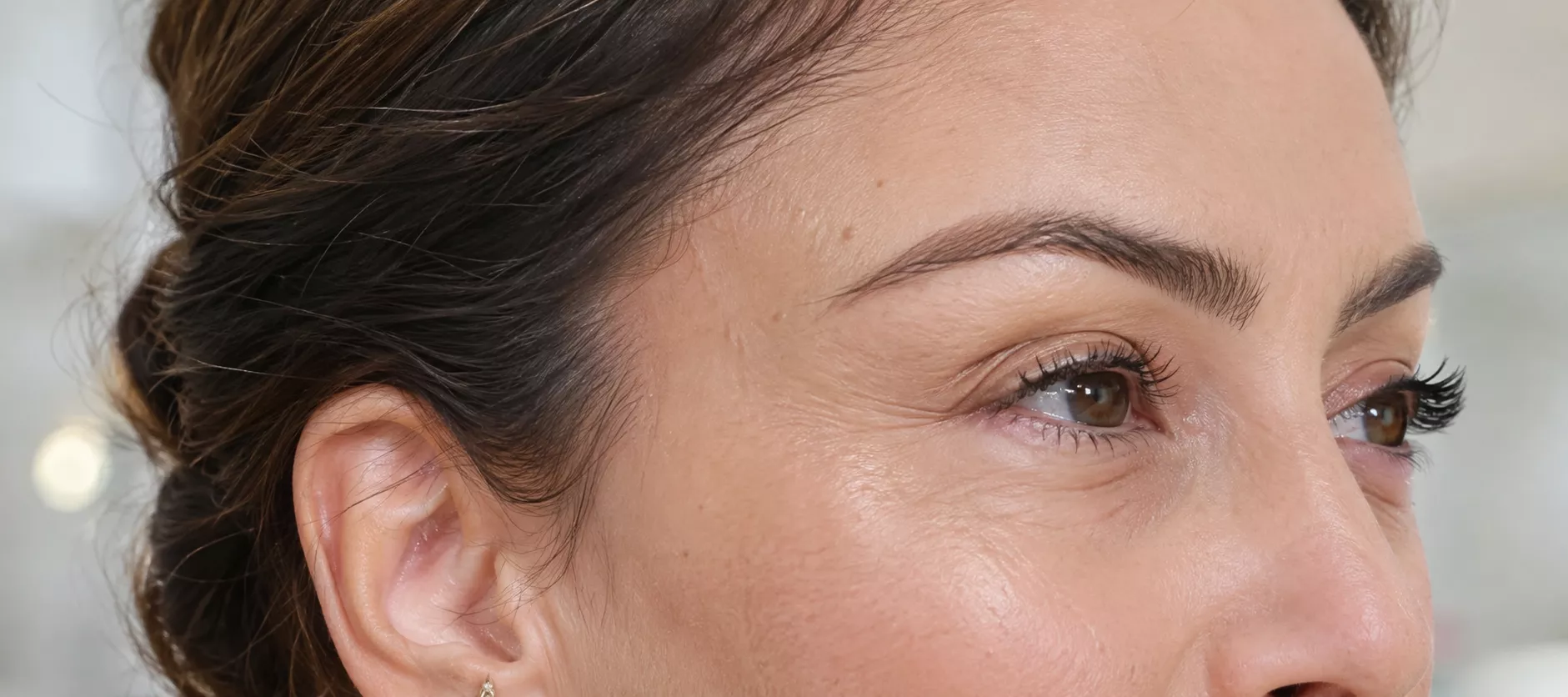
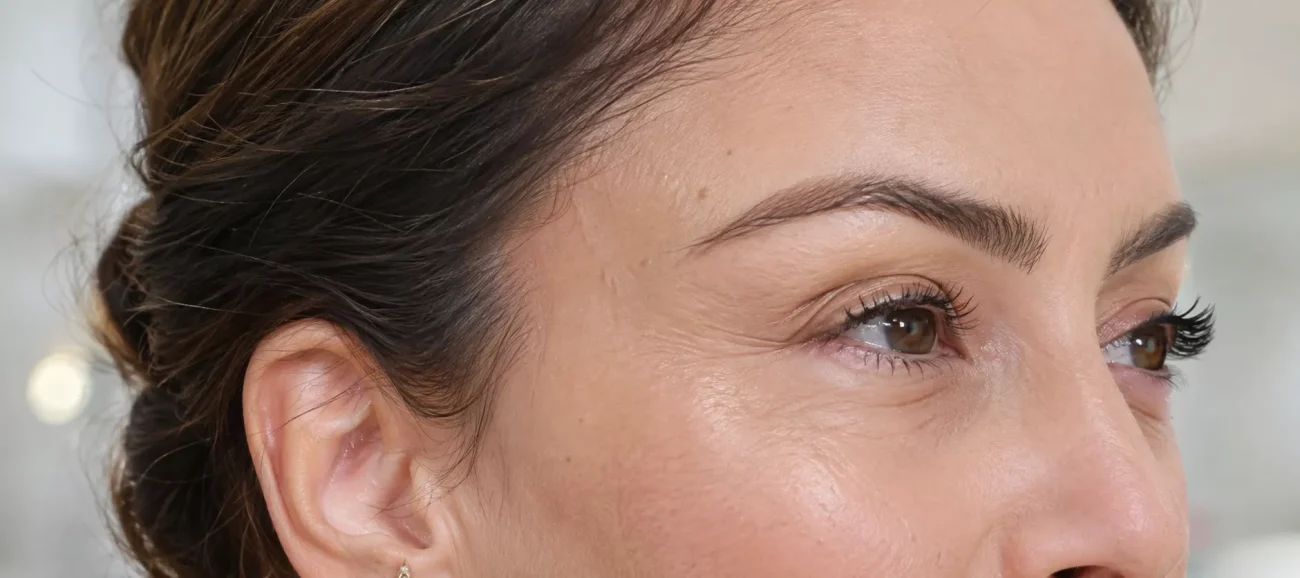
An endoscopic temple lift is a surgical procedure that lifts sagging tissues in the temple area and the outer ends of the eyebrows. Also known as a temporal lift, this technique aims to reduce sagging around the eyes and create a more balanced appearance in the upper part of the face. The surgery is performed with the help of a camera through small incisions made within the scalp.
Aging, genetic factors, and loss of skin elasticity can cause the outer portions of the eyebrows to gradually descend. This change may lead to heaviness in the upper eyelids, loose skin around the outer corners of the eyes, and a tired facial expression. Endoscopic temple lift surgery aims to tighten the eye area by repositioning the tissues in these regions.
What Is an Endoscopic Temple Lift?
An endoscopic temple lift is a surgical procedure that elevates the outer portions of the eyebrows and the temple tissues. A thin camera-equipped device called an endoscope allows the surgeon to view the structures beneath the skin on a screen. This makes it possible to reach the target tissues without creating a large incision.
The temple area affects the position of the eyebrows and the tension of the skin around the eyes. When the supporting tissues in this region become loose, the tail of the eyebrow may descend. Excess skin accumulating around the outer corners of the eyes can make the eyes appear narrower.
The endoscopic technique does not rely solely on pulling the skin. The surgeon releases the tissues that have shifted downward and secures them in a higher position. The goal is to adjust the position of the tissues in the upper face while preserving the natural shape of the eyebrows.
Which Areas Does an Endoscopic Temple Lift Affect?
An endoscopic temple lift primarily affects the outer third of the eyebrows, the temples, and the outer areas around the eyes. The extent of the procedure is determined by the degree of sagging in these regions.
The following changes may be observed after surgery:
- Eyebrow tail: The descended outer portion of the eyebrow can be lifted to a higher position.
- Temple area: Loose soft tissues may be tightened and repositioned.
- Outer corners of the eyes: Skin accumulation caused by drooping eyebrows may be reduced.
- Upper eyelid area: Correcting the eyebrow position may reduce the appearance of heaviness above the eyelids.
- Upper face: A more balanced transition between the eyebrows and the eye area may be achieved.
However, a temple lift is not a procedure that directly changes the anatomical shape of the eyes. Conditions requiring intervention on the ligaments supporting the outer corners of the eyes are addressed through different surgical techniques.
How Is an Endoscopic Temple Lift Performed?
Endoscopic temple lift surgery is performed through small incisions made within the scalp. With the help of a camera, the surgeon releases the tissues and secures them in the planned position. Protecting the facial nerves and surrounding blood vessels is important during the procedure.
Before surgery, the surgeon examines the current eyebrow position, eyelid structure, and differences between the two sides of the face. The direction in which the tissues will be lifted is then determined.
The surgical process generally consists of the following steps:
- Planning: The eyebrow tail, temple line, and tissues to be lifted are marked.
- Anesthesia: Anesthesia suitable for the surgical plan is administered.
- Creating small incisions: Incisions are made within the scalp to provide access to the temple area.
- Endoscopic visualization: Anatomical structures beneath the skin are monitored using a camera.
- Tissue release: The connections holding the downward-shifted tissues are carefully loosened.
- Lifting and fixation: The temple tissues and eyebrow tails are moved to the planned level and secured.
- Closure: The incisions are closed with sutures or other suitable surgical methods.
Surgical sutures or special fixation systems may be used to secure the tissues. The selected technique depends on the tissue structure and the extent of the surgery.
Differences Between an Endoscopic Temple Lift and Other Procedures
An endoscopic temple lift is a surgical technique that focuses specifically on the outer eyebrows and temple area. However, it is not the same procedure as a brow lift, forehead lift, or eyelid surgery.
These procedures target different anatomical concerns.
| Procedure | Target Area | Main Purpose |
|---|---|---|
| Endoscopic temple lift | Temples and outer eyebrows | Reduce outer eyebrow drooping and temple tissue laxity |
| Endoscopic brow lift | Eyebrow line and forehead tissues | Adjust eyebrow position across a wider area |
| Traditional forehead lift | Forehead and eyebrow area | Correct widespread forehead and eyebrow sagging |
| Upper eyelid surgery | Upper eyelids | Remove excess skin and adjust fatty tissue when necessary |
| Almond eye surgery | Outer corners of the eyes | Adjust the position and support of the outer eye corners |
For individuals with drooping across the entire eyebrow line, an endoscopic brow lift may offer a more comprehensive option. In contrast, a temple-focused approach may be sufficient when only the outer portions of the eyebrows have descended.
The source of sagging around the eyes must be identified correctly. Drooping eyebrows and actual excess eyelid skin may occur at the same time.
Who Is a Suitable Candidate for an Endoscopic Temple Lift?
An endoscopic temple lift may be considered for individuals with drooping outer eyebrows and mild to moderate sagging in the temple area.
Downward movement of the eyebrow tails, skin accumulation along the outer portions of the upper eyelids, and loose temple tissues are common reasons for considering this procedure.
Age is not the only factor considered when assessing suitability. The natural position of the eyebrows, hairline, skin structure, and overall facial proportions are evaluated together. Younger individuals with genetically low eyebrows may also be assessed for surgery.
However, in individuals with significant volume loss around the temples, the main concern may not be tissue sagging. In such cases, treatments that restore volume may be considered instead of surgical lifting.
Who Is Not a Suitable Candidate for an Endoscopic Temple Lift?
Uncontrolled serious medical conditions, active infections, and factors that negatively affect wound healing may increase the risks associated with surgery.
For individuals with advanced eyebrow and forehead sagging, treating only the temple area may not be sufficient. Significant hairline recession or previous surgical procedures may also influence the choice of technique.
Dry eyes, incomplete eyelid closure, and conditions affecting the facial nerves require additional evaluation. Before surgery, the patient’s overall health and the functions of the eye area should be examined in detail.
What Should Be Considered Before Endoscopic Temple Lift Surgery?
Before surgery, the position of the eyebrows, eyelid movement, and tissues in the temple area are evaluated. Existing asymmetry around the eyes and natural facial expressions are also important for surgical planning.
The patient’s medications, chronic medical conditions, and previous surgeries are reviewed. Medications that may increase bleeding risk should be reported to the doctor. Prescription medications should not be discontinued without medical approval.
Smoking and nicotine use may negatively affect wound healing. For this reason, patients may be advised to stop smoking before surgery. The surgery date is determined after the necessary blood tests and anesthesia assessment have been completed.
Patients who have previously received Botox, fillers, or surgical procedures around the eyebrows should share this information. Previous treatments may affect tissue position and the surgical plan.
How Long Does Endoscopic Temple Lift Surgery Take?
An endoscopic temple lift generally takes 1 to 2 hours when performed as a standalone procedure. However, the duration may increase depending on the extent of the tissues being lifted and any additional procedures.
The surgery may be performed under general anesthesia or, in suitable patients, with sedation and local anesthesia. The choice of anesthesia is based on the patient’s health and surgical requirements.
After the procedure, the patient remains under observation for a certain period. Patients in good general condition may be discharged on the same day. However, some patients may require hospital monitoring.
Recovery Process After an Endoscopic Temple Lift
The initial recovery period after an endoscopic temple lift generally takes 1 to 2 weeks. Swelling, bruising, and tissue sensitivity are usually more noticeable during this period. The final facial appearance may take longer to develop.
Immediately after surgery, patients may experience tightness in the temples, numbness in the scalp, and mild swelling around the eyes. Bruising may sometimes extend toward the eyelids. These changes often become more noticeable during the first few days and gradually decrease.
| Recovery Period | Expected Changes |
|---|---|
| First 24-48 hours | Tightness, tenderness, and swelling may occur around the temples. |
| 3-5 days | Swelling and bruising may become more noticeable. |
| 7-10 days | A significant portion of the swelling may decrease. Sutures may be removed if appropriate. |
| 2-3 weeks | Returning to daily activities and social life generally becomes easier. |
| 1-3 months | The tissues continue adjusting to their new position, and remaining swelling gradually decreases. |
| 3-6 months | Healing continues as scars mature and the tissues settle into place. |
These timeframes are approximate. The extent of the surgery, the patient’s general health, and individual healing speed may affect recovery.
People with desk jobs can generally return to work within 7 to 10 days. Those working in physically demanding occupations may need a longer recovery period.
What Should You Avoid After an Endoscopic Temple Lift?
After surgery, the incision areas must be protected, and swelling should be kept under control. Keeping the head elevated during the first few days may help reduce swelling around the eyes.
The main points to consider during recovery include:
- Taking prescribed medications as instructed by the doctor.
- Resting with the head slightly elevated during the first few days.
- Avoiding pressure on the surgical area.
- Keeping the incisions in the scalp clean and dry.
- Avoiding heavy exercise and intense physical activity for a period of time.
- Resuming hair washing, hair coloring, and cosmetic treatments only with medical approval.
- Attending scheduled follow-up appointments.
Numbness or itching in the scalp may continue for some time. However, increasing pain, sudden swelling, high fever, or significant bleeding should not be considered normal. Sudden changes in vision require urgent medical evaluation.
Does an Endoscopic Temple Lift Leave Scars?
In endoscopic temple lift surgery, incisions are generally made within the scalp, making scars less noticeable from the outside. However, any surgical incision can leave a scar as it heals.
Scar visibility depends on hair density, skin structure, and wound healing. Redness or tenderness may be present along the incision lines during the first few weeks. These changes are expected to become less noticeable over time.
Some patients may experience temporary hair loss around the incision sites. More rarely, visible scars or permanent hair loss may occur. Therefore, an endoscopic temple lift should not be considered a completely scar-free procedure.
When Will the Results of an Endoscopic Temple Lift Be Visible?
The initial effects of endoscopic temple lift surgery become clearer as swelling decreases. During the first few weeks, the eyebrows may appear higher than expected or uneven between the two sides.
As the tissues settle and swelling subsides, the appearance becomes more balanced. Although noticeable changes are seen within the first few months in many patients, evaluating the final result may take longer.
The main goal of the surgery is to position the outer ends of the eyebrows according to natural facial proportions. Excessive lifting may create a surprised or overly tight facial expression. For this reason, the original eyebrow position and existing facial structure are essential elements of surgical planning.
Is an Endoscopic Temple Lift Permanent?
An endoscopic temple lift is a surgical procedure that can provide long-lasting results. However, surgery does not stop the aging process.
The surgically elevated tissues heal in their new positions. Nevertheless, the skin continues to lose elasticity over time. Genetic factors, sun exposure, smoking, and the rate of aging may affect how long the results last.
It is possible for the eyebrows and temple tissues to become loose again over the years. Therefore, the appearance should not be expected to remain unchanged for the same length of time in every patient.
What Are the Risks of Endoscopic Temple Lift Surgery?
Endoscopic temple lift surgery carries surgical risks such as bleeding, infection, nerve injury, and wound healing problems. The use of small incisions does not mean the procedure is completely risk-free.
Swelling, bruising, temporary numbness, and tenderness may occur after surgery. Less common complications include hematoma, which is an accumulation of blood, noticeable asymmetry, and hair loss around the incisions.
Branches of the facial nerve passing through the temple region are responsible for eyebrow and forehead movements. Injury to these nerves may cause temporary or, rarely, permanent problems with eyebrow movement.
The eyebrows may also be lifted higher than expected, remain insufficiently elevated, or develop differences in position between the two sides. Evaluating existing asymmetry and protecting anatomical structures are important parts of surgical planning.
Which Procedures Can Be Combined with an Endoscopic Temple Lift?
An endoscopic temple lift may be planned in the same surgical session as eyelid surgery, brow lifting, or a midface lift. The choice of combined procedures depends on the concerns affecting different parts of the face.
If significant excess skin is present in the upper eyelids along with drooping eyebrows, upper eyelid surgery may be considered. This is because lifting the temple tissues does not eliminate all excess skin on the upper eyelids.
For individuals with noticeable sagging in the cheeks and around the cheekbones, an endoscopic midface lift is another option. Unlike a temple lift, a midface lift focuses on the position of the cheek tissues.
For those seeking aesthetic changes to the outer corners of the eyes, the differences between almond eye surgery and a temple lift should be evaluated. These two procedures do not target the same anatomical structures.
Combining multiple procedures may affect the total duration of surgery and the recovery process.
Endoscopic Temple Lift Prices 2027
Endoscopic temple lift prices in 2027 may vary depending on the extent of the surgery, the surgical technique used, and any additional procedures. There is no single fixed fee that applies to every patient.
A procedure limited to the temple area is not the same surgical plan as one that also includes the forehead and eyebrow tissues. Therefore, the size of the treatment area affects the price.
Other factors that may influence the total cost include general anesthesia, hospital services, fixation systems used during surgery, and the duration of the operation. Additional procedures, such as upper eyelid surgery or a midface lift, may also change the overall cost.
Since no single verified and current price range is available for 2027, providing an exact figure would not be appropriate. When reviewing the cost, it is also important to determine whether surgery, anesthesia, hospital services, and follow-up appointments are included in the total fee.
Frequently Asked Questions
At What Age Can an Endoscopic Temple Lift Be Performed?
There is no universal age limit for an endoscopic temple lift. The decision to undergo surgery is based on the degree of sagging in the eyebrow and temple areas. The procedure may be considered at a younger age due to genetically low eyebrows or later in life because of tissue laxity.
Is Endoscopic Temple Lift Surgery Painful?
Patients do not feel pain during surgery because anesthesia is administered. After the procedure, tightness, pressure, and mild to moderate pain may occur around the temples. These symptoms can generally be controlled with prescribed pain medication.
Does an Endoscopic Temple Lift Change Eye Shape?
An endoscopic temple lift does not directly change the anatomical shape of the eyes. Elevating the eyebrow tails may create a more open appearance around the outer eye area. However, permanently repositioning the outer corners of the eyes may require different surgical procedures.
Are an Endoscopic Temple Lift and Fox Eye Surgery the Same?
An endoscopic temple lift and fox eye surgery are not necessarily the same procedure. Fox eyes, also known as the fox eye look, is an aesthetic term describing an upward-slanting appearance at the outer corners of the eyes. An endoscopic temple lift, on the other hand, is a surgical technique that targets a specific anatomical region.
Will the Eyebrows Be Lifted Too High After an Endoscopic Temple Lift?
During the first few weeks after surgery, the eyebrows may appear higher than their planned final position. As swelling decreases and the tissues settle, the eyebrow position may change. However, excessive lifting can also lead to a lasting aesthetic concern. Therefore, careful measurements and planning before surgery are important.
Can an Endoscopic Temple Lift Be Performed Without Surgery?
An endoscopic temple lift cannot be performed without surgery. The procedure involves surgically releasing the tissues and securing them in a new position. Botox, fillers, and energy-based treatments may address different concerns. However, these methods are not direct alternatives to endoscopic surgery.
When Can You Wash Your Hair After an Endoscopic Temple Lift?
The appropriate time to wash the hair depends on the condition of the incisions and the surgical technique used. Some patients may be allowed to wash their hair carefully within the first few days. To avoid damaging the incisions, the doctor’s recommendations regarding water temperature, hair products, and washing techniques should be followed.
When Can You Exercise After an Endoscopic Temple Lift?
Light walking can generally be resumed during the first few days. However, patients usually need to wait several weeks before returning to strenuous exercise, weightlifting, and intense physical activities. The decision to resume exercise should be based on swelling and wound healing.
Can an Endoscopic Temple Lift Cause Hair Loss?
Temporary hair loss may occur around the incision sites after an endoscopic temple lift. This may be related to surgical trauma, tissue tension, or wound healing. Hair often grows back over time. However, in rare cases, permanent hair loss may develop along the incision line.
Can an Endoscopic Temple Lift Be Repeated?
An endoscopic temple lift may be repeated in some patients. However, scar tissue from the previous surgery, hairline position, and current eyebrow level must be reassessed. A second procedure may require a different surgical technique from the initial operation.
Can an Endoscopic Temple Lift Correct Drooping Eyelids?
An endoscopic temple lift may reduce upper eyelid heaviness caused by drooping eyebrows. However, it does not treat true eyelid ptosis caused by weakness of the muscle responsible for lifting the upper eyelid. In such cases, ptosis surgery should be considered separately.